LOTL Infra
Strategic Investment & Design Ecosystem
120-Day Partnership Sprint
Case studies and portfolio

Digital Perception.Brand Credibility.Automated Sales System.In just 120 days.

Book a one-on-one GMeet with the person who'll handle your account 30 minutes on Google Meet, with the person who will run your 120 days. Pick a slot that suits you; the calendar is open now.

You're at the right place if you are…

  1. Planning to participate in an exhibition
  2. Lost trust in social media agencies
  3. Launching a new brand or a new collection
  4. Want a sales system that runs without you
  5. Facing digital competition from your competitors
  6. An architect or designer who has launched a product
  7. Looking for qualified enquiries
Three case studies. Click one to open the full 120-day build.

This is for interior product owners

You sell through architects, designers, dealers or showrooms. The product is good; the digital presence is not doing it justice. One company handles the entire build, from brand and content to a working enquiry system. Not four or five agencies.

Brand

  • Brand synopsis
  • Brand guidelines
  • Brand profile
  • Catalogues, presentation and mobile

Content

  • Brand films and ad videos
  • Product and content shoots
  • Reels
  • Social media, planned and posted

Digital

  • Website
  • Google campaigns
  • Meta campaigns
  • Retargeting

Sales system

  • CRM and lead routing
  • WhatsApp automation
  • Pre-sales call SOP
  • Daily reporting and dashboard

Why 120 days, not an annual retainer

The work is a defined set of deliverables. It does not need a year. It needs a fixed window, a clear order of execution, and a handover at the end.

  1. 1 to 30
    Foundation
    • Brand synopsis
    • Brand guidelines
    • Data collection
    • Communication system
    • Social media begins
  2. 31 to 60
    Production
    • Shoots
    • Catalogues
    • Website
    • Ad videos
    • Sales system setup
  3. 61 to 90
    Live
    • Refined enquiries coming in
    • Pre-sales system in place
    • Daily reporting with the pre-sales team
    • Sales system on autopilot
    • Owner watches the dashboard and closes
  4. 91 to 120
    Handover
    • Maintenance and improvisation
    • Retargeting campaigns
    • Further refined enquiries
    • Handover document of the proven system
    • Continue with anyone, at much lower cost
Case study 1 of 3

Laze Lifestyle

Among India's top 5 outdoor furniture brands. 24 years in outdoor furniture manufacturing, with stores in Pune, Mumbai, Surat, Hyderabad and Bangalore.

  • ProgrammeDigital Perception & Credibility + Automated Sales System
  • Duration120 days
  • Head officePune
  • Franchise citiesMumbai, Surat, Hyderabad, Bangalore
  • ChannelArchitects, interior designers, showroom walk-ins
72
Showroom visits recorded in the CRM
472
B2B enquiries from architects, designers and dealers
108%
Increase in enquiry qualification ratio
30%
Lower marketing cost than the previous agency
1 Cr+
Deals closed from sprint enquiries

The problem

Laze had everything a strong brand needs on the ground: references, operations, manufacturing scale, 24 years in the industry. What it lacked was digital perception. Brands with weaker products had better catalogues, better social media and better websites, and new enquiries were going to them.

Two things had to change. The product's quality had to be communicated to an audience that had never heard of Laze. And the franchise outlets needed support: the head office city ran on referrals, the franchise cities did not have that base.

At the time, the catalogue went out as a Google Drive link or a PowerPoint. There was no exhibition presence, no brand positioning film, no advertising, and no properly produced catalogue or presentation.

What LOTL Infra did, in order

Every item below is a deliverable that exists and is in use at Laze today.

  1. Day 1 to 30

    Brand synopsis

    The first document, every time.

    The brand synopsis brings everyone onto the same page: who the brand is, what its mid-term and long-term goals are, who it sells to, how it speaks, and where it stands against competitors. Once this document is frozen, every piece of communication that follows is uniform.

    • Laze in a nutshell
    • Target audience
    • Core values
    • Competitive landscape
    • Brand personality
    • Brand language and tone
    • Brand story
    • Brand positioning statement
    • Mid-term and long-term goals
  2. Day 1 to 30

    Brand guidelines

    One design language across every format.

    Logo usage, palette, typography, imagery direction and layout rules, written once so that catalogues, social media, website, films and store collateral all read as one brand.
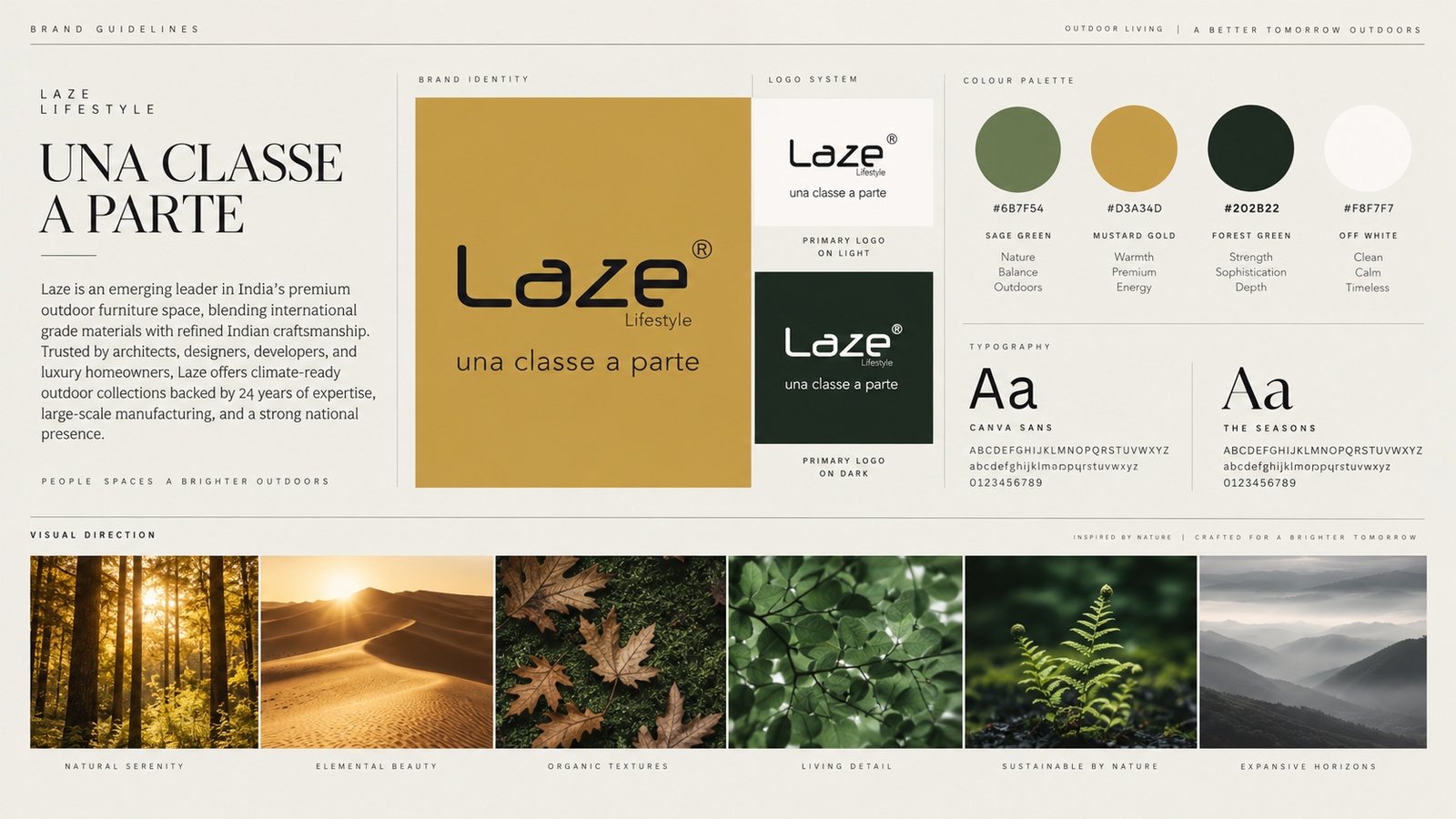
    Laze Lifestyle brand guidelines snapshot: logo, colour palette, typography and imagery direction
    Brand guidelines snapshot.
  3. Day 31 to 60

    Brand films

    Two films: a positioning ad film and a master brand film that explains what Laze is and why it is different.

    Both films were produced for exhibitions and sponsored events, where Laze had never had a screen presence. The positioning ad film played at the Times of India Film Awards (TOIFA), a sponsored event with film celebrities in attendance.

    0:00
    Master brand film. Explains what Laze is, how it is made and why it is different.
    0:00
    Positioning ad film. The cut that played at TOIFA. Also on YouTube
    0:00
    The film on screen at TOIFA.
  4. Day 31 to 60

    Content shoot: reels, ad videos and product shoots

    Shot in one production window, cut for social media, ads and catalogue use.

    Six examples from the content produced. They cover brand reels, a hook edit, an influencer collaboration, a product teaser launch and a reel built for one specific demographic (Alibaug second-home owners).

    0:00
    Brand reel
    0:00
    Brand reel
    0:00
    Hook edit reel
    0:00
    Influencer reel
    0:00
    Product teaser launch reel
    0:00
    Demographic-specific reel (Alibaug)
  5. Day 1 onwards

    Social media

    Designed, scheduled and posted under the guidelines.

    The grid follows the synopsis and guidelines: one palette, one typographic voice, a consistent balance of product, lifestyle and collection posts. Content days were a tracked KPI, not a by-product.
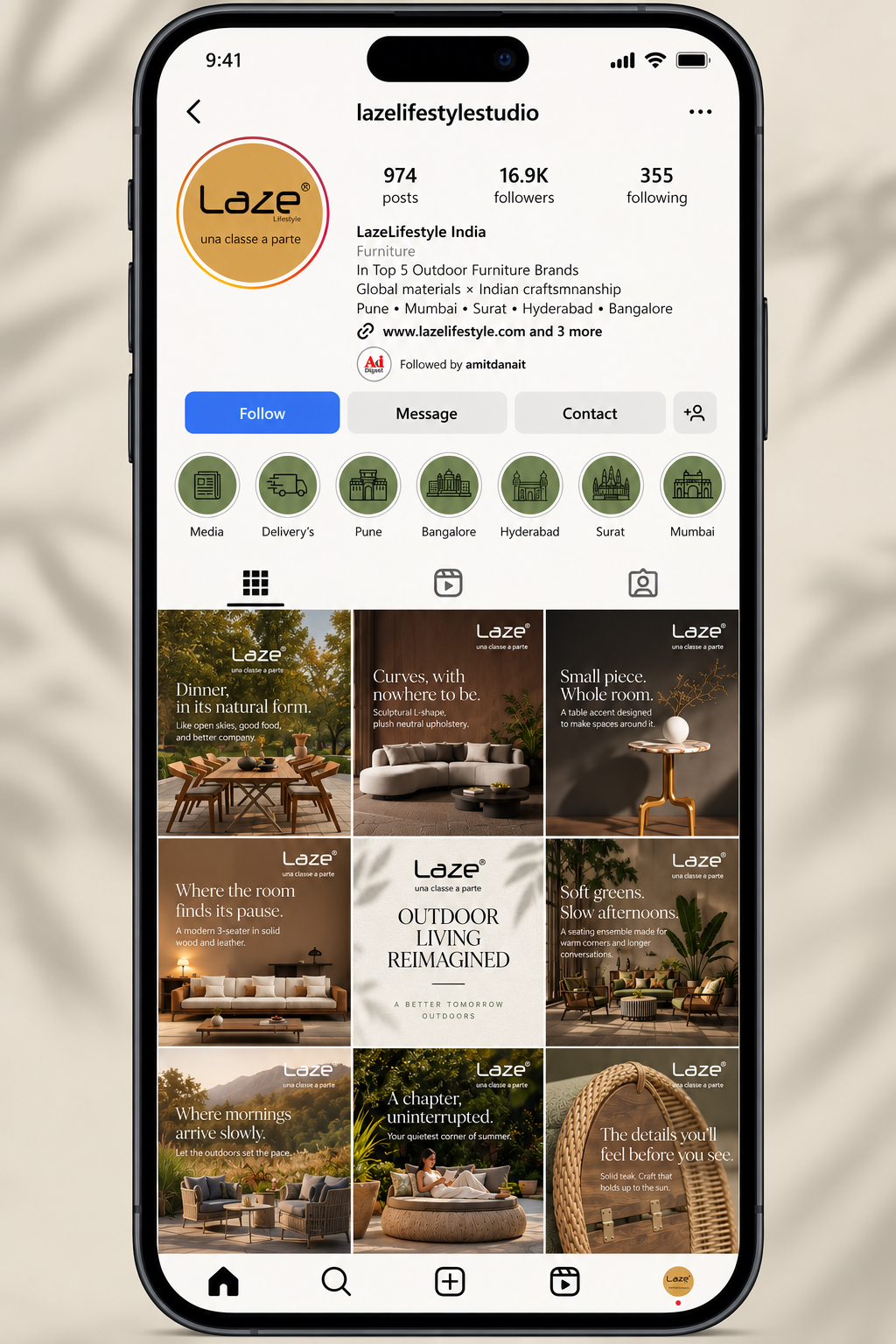
    Laze Lifestyle Instagram profile and post grid after the makeover
    Instagram profile and grid after the makeover.
  6. Day 31 to 60

    Catalogues

    A presentation format for meetings and a mobile format for WhatsApp sharing.

    Replaces the Drive link and the PowerPoint. The presentation version is built for architect meetings and exhibition tables; the mobile version is built to be read on a phone within seconds of an enquiry.
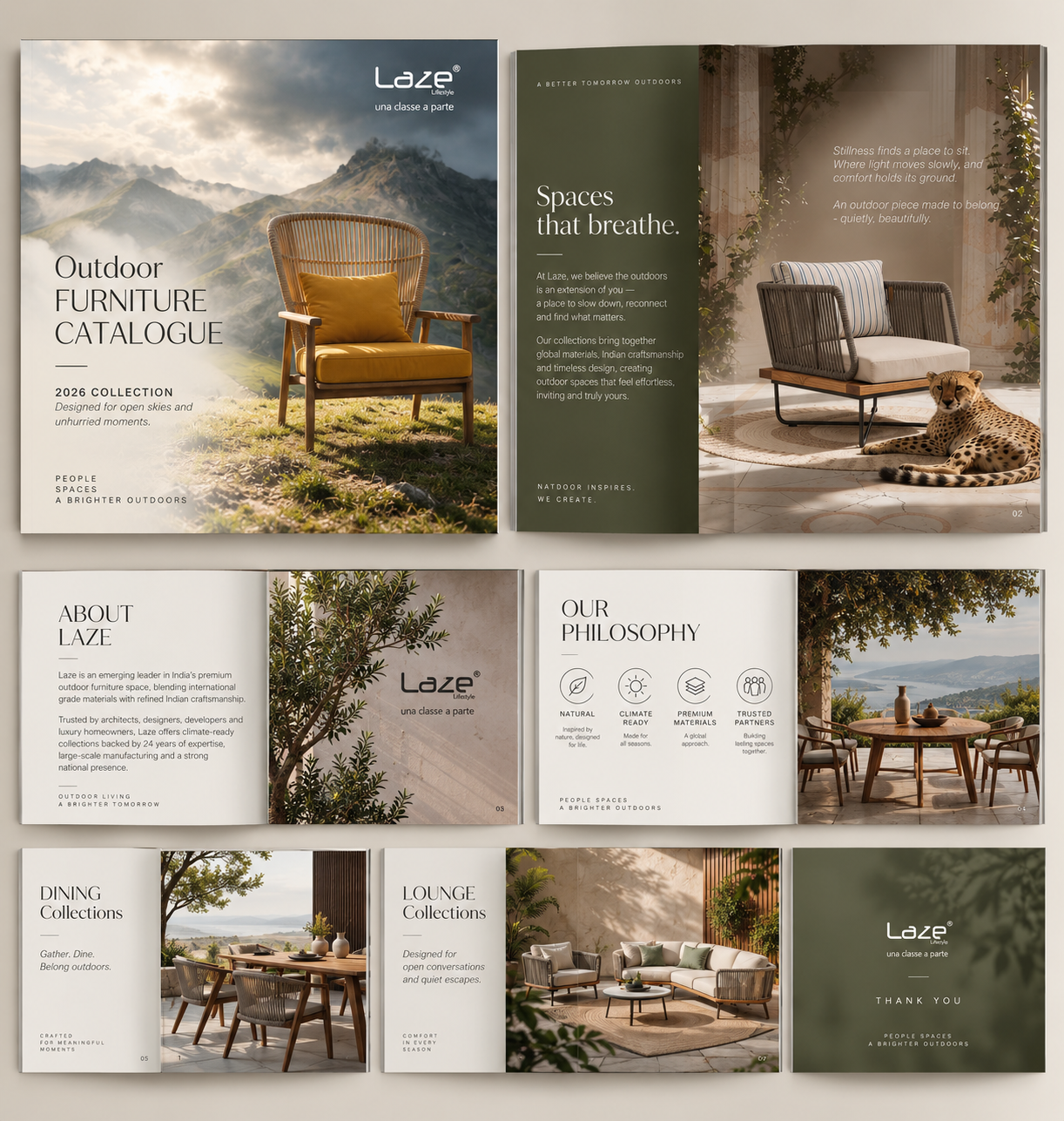
    Laze Lifestyle outdoor furniture catalogue spreads: cover, philosophy, about, dining and lounge collections
    Catalogue spreads: cover, philosophy, about, dining and lounge collections.
  7. Day 31 to 60

    Website

    Built to carry the brand and to receive enquiries.

    Home, collections, product pages and enquiry forms, with every form feeding the CRM directly. The 24-year manufacturing story is on the first screen because it is the single fact that separates Laze from the brands that were winning on presentation alone.
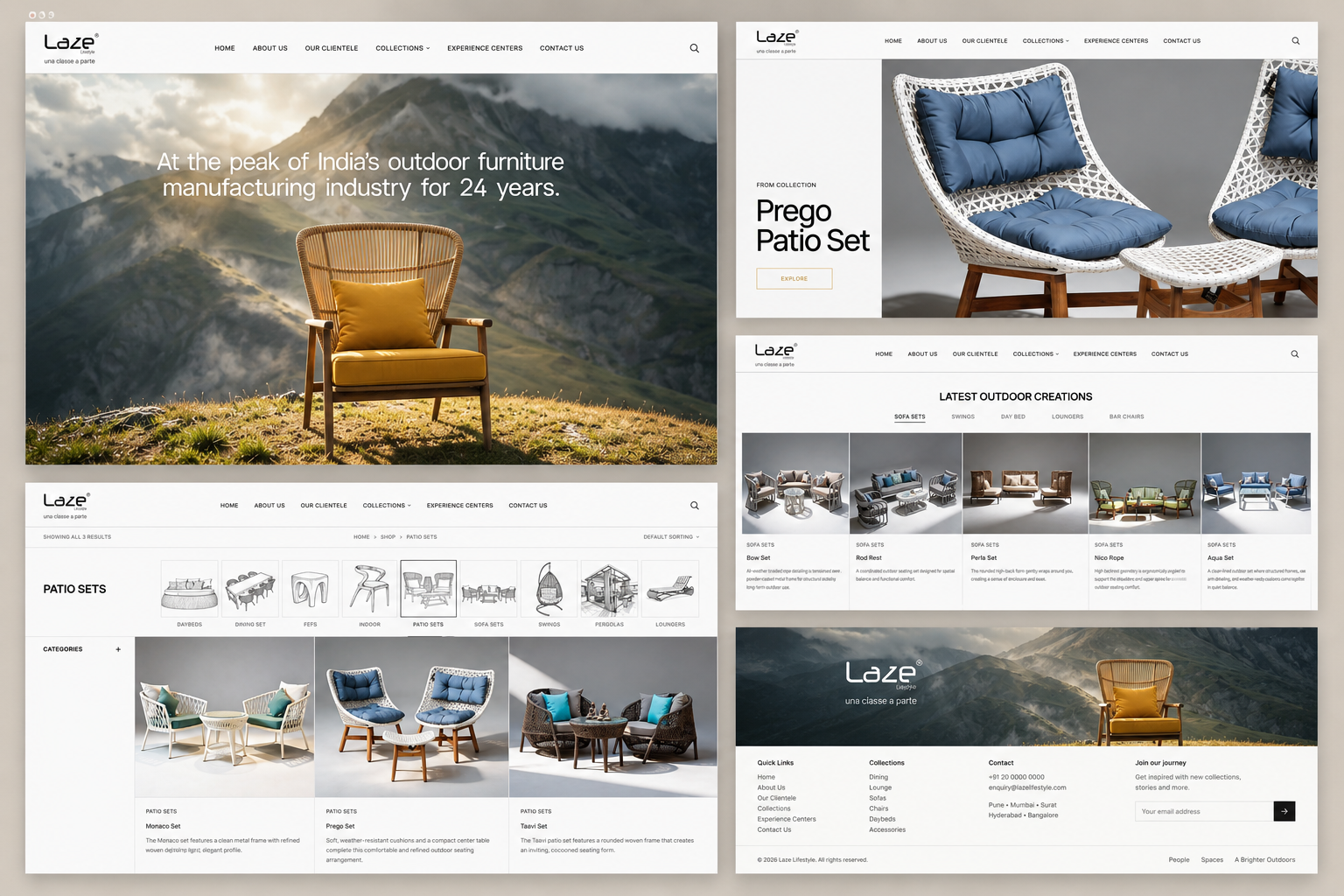
    Laze Lifestyle website screens: home, collections, product and contact pages
    Website: home, collections, product and contact screens.
  8. Day 31 onwards

    Digital marketing setup

    Google and Meta.

    Campaigns were built city by city, one for the head office and one for each franchise city, so that the franchise outlets received enquiries in their own territory for the first time. Meta carried the reels and product creatives to architects, designers and homeowners; Google caught the direct search intent. Every enquiry landed in the same CRM with its city and store already tagged.

    Google

    Search campaigns for outdoor furniture intent, by city. Retargeting for site visitors who did not enquire.

    Meta

    Reel and product creatives to architect, designer and homeowner audiences. Lead forms and WhatsApp click-to-chat. Retargeting in days 91 to 120.

  9. Day 31 to 90

    Sales system setup

    CRM, pre-sales SOP, follow-up materials, daily reporting.

    Every enquiry from the website, Meta and Google flows into one CRM, assigned to the right store by city. Each lead is worked through a fixed pipeline: acknowledged, called, visit done, qualified, good lead. The owner reads the dashboard and steps in to close.
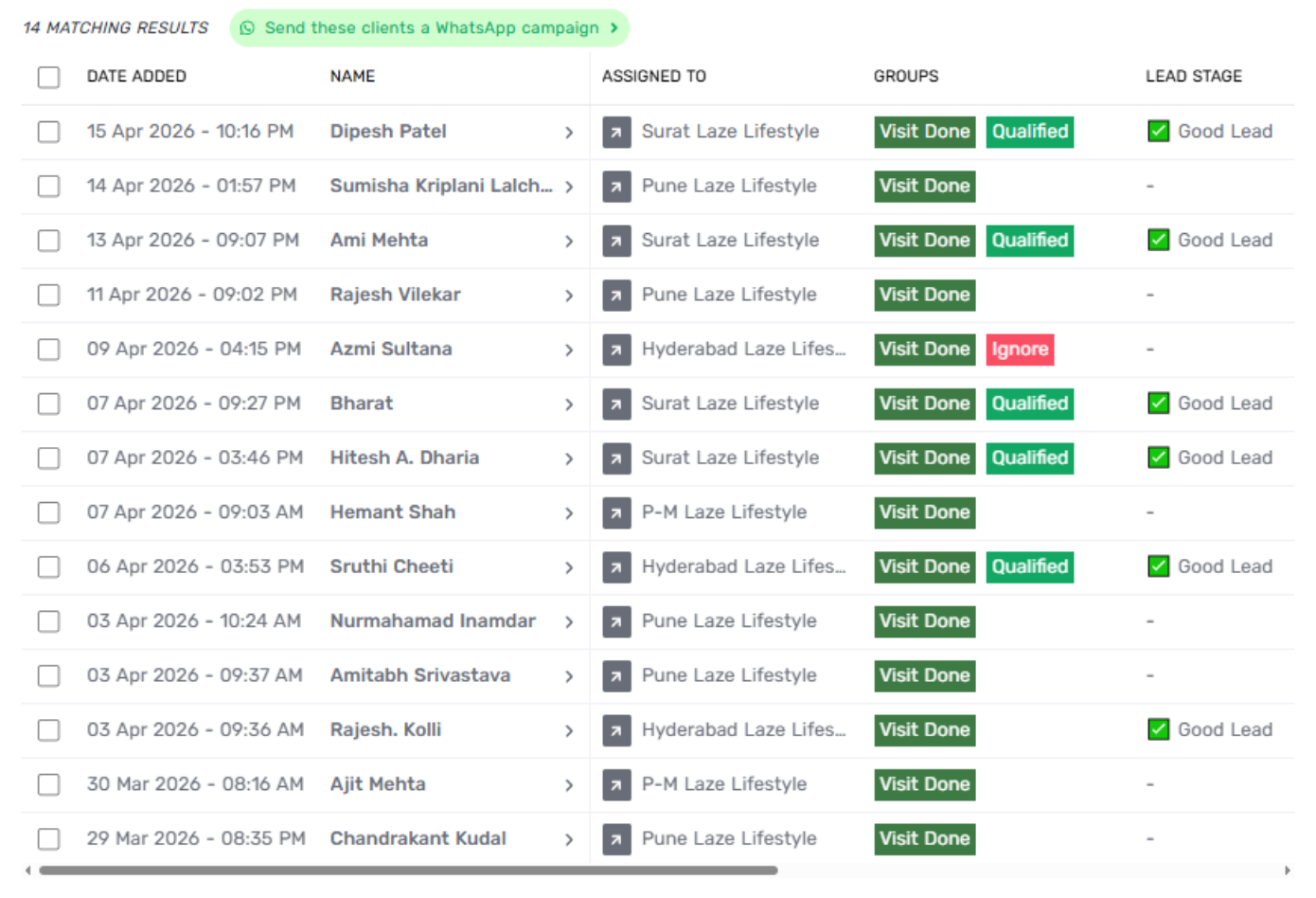
    CRM screenshot showing Laze leads assigned to Pune, Surat, Hyderabad and Mumbai stores with visit-done and qualified tags
    CRM view. Leads assigned by store, tagged Visit Done, Qualified and Good Lead.

    Call pitch SOP

    A written script and qualification questions for the pre-sales team, so every first call sounds like the brand and captures the same data.

    Follow-up materials

    Mobile catalogue, store details and collection material, ready to send from the CRM after the first call.

    Daily reporting

    A daily status of new leads, calls made, visits booked and qualification outcomes, reviewed with the pre-sales team.

    Pre-sales handover

    By day 90 the pre-sales team ran the pipeline on their own. LOTL Infra moved to monitoring and improvisation.

  10. Day 61 onwards

    WhatsApp marketing

    The part most brands skip.

    Every enquiry receives an acknowledgement on WhatsApp the moment it comes in, with the brand introduction and the mobile catalogue. By the time pre-sales calls, the person already knows who Laze is and has seen the product.

    When a segment goes cold, one bulk WhatsApp campaign from the CRM revives it at once, without the pre-sales team calling each contact individually.

    Why WhatsApp works for this audience: architects, designers and busy homeowners want to text. They do not want to take a call from an unknown number. Meeting them on WhatsApp first turns the later call into a warm one.
  11. Measured

    KPIs and tangible output

    Three KPIs were fixed before the sprint began and reviewed mid-sprint with the underlying data.

    Targets were agreed up front and measured from the CRM and the content log, not from ad-platform numbers. Both enquiry targets were crossed at the mid-sprint review; by day 120 the CRM held 72 showroom visits and 472 B2B enquiries.
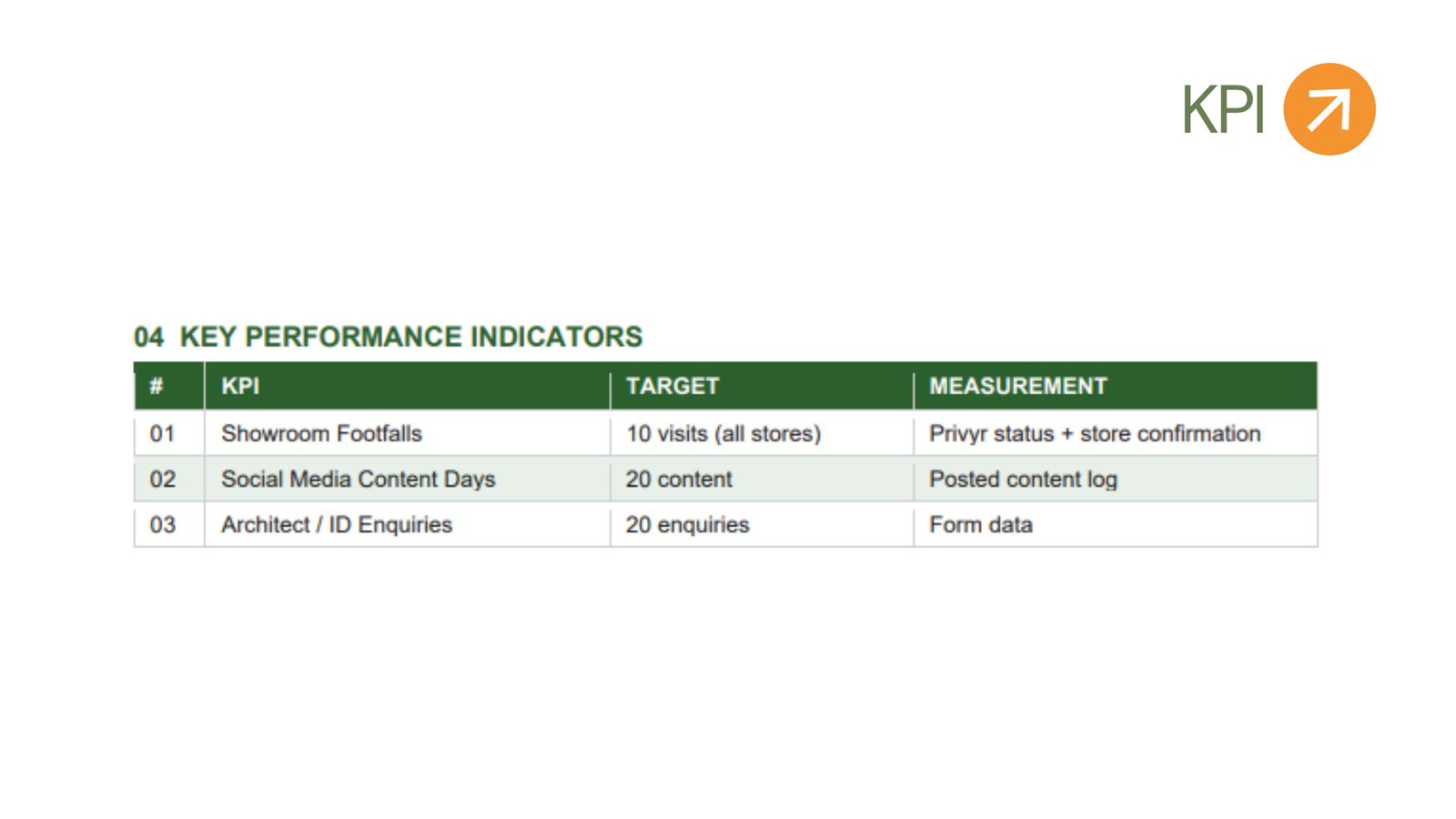
    KPI table: showroom footfalls target 10, social media content days target 20, architect and ID enquiries target 20
    KPI sheet agreed before the sprint began.
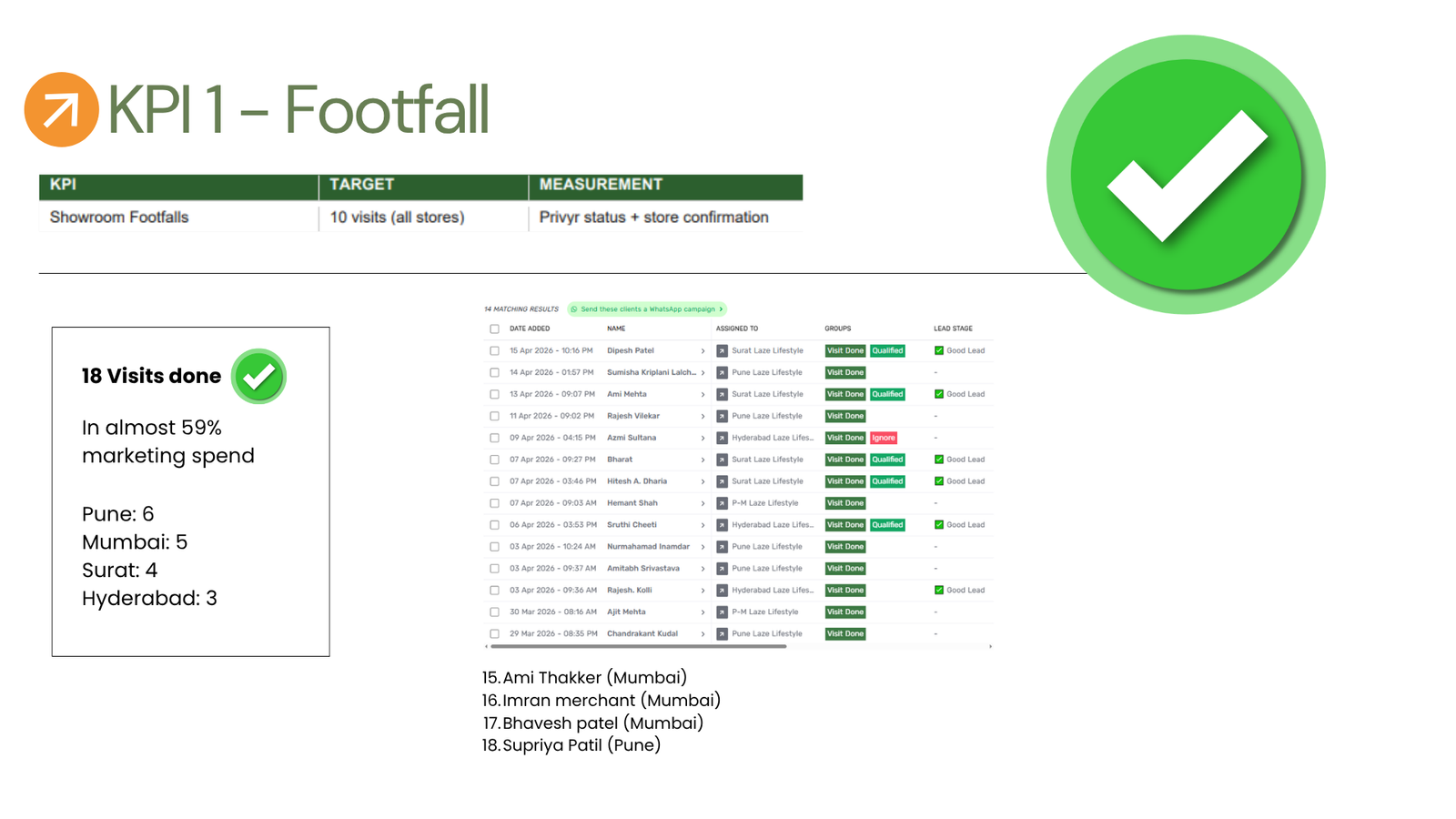
    KPI 1 footfall: 18 showroom visits done at 59 percent of marketing spend, Pune 6, Mumbai 5, Surat 4, Hyderabad 3
    KPI 1, showroom footfall, at the mid-sprint review: target of 10 already crossed, split across Pune, Mumbai, Surat and Hyderabad.
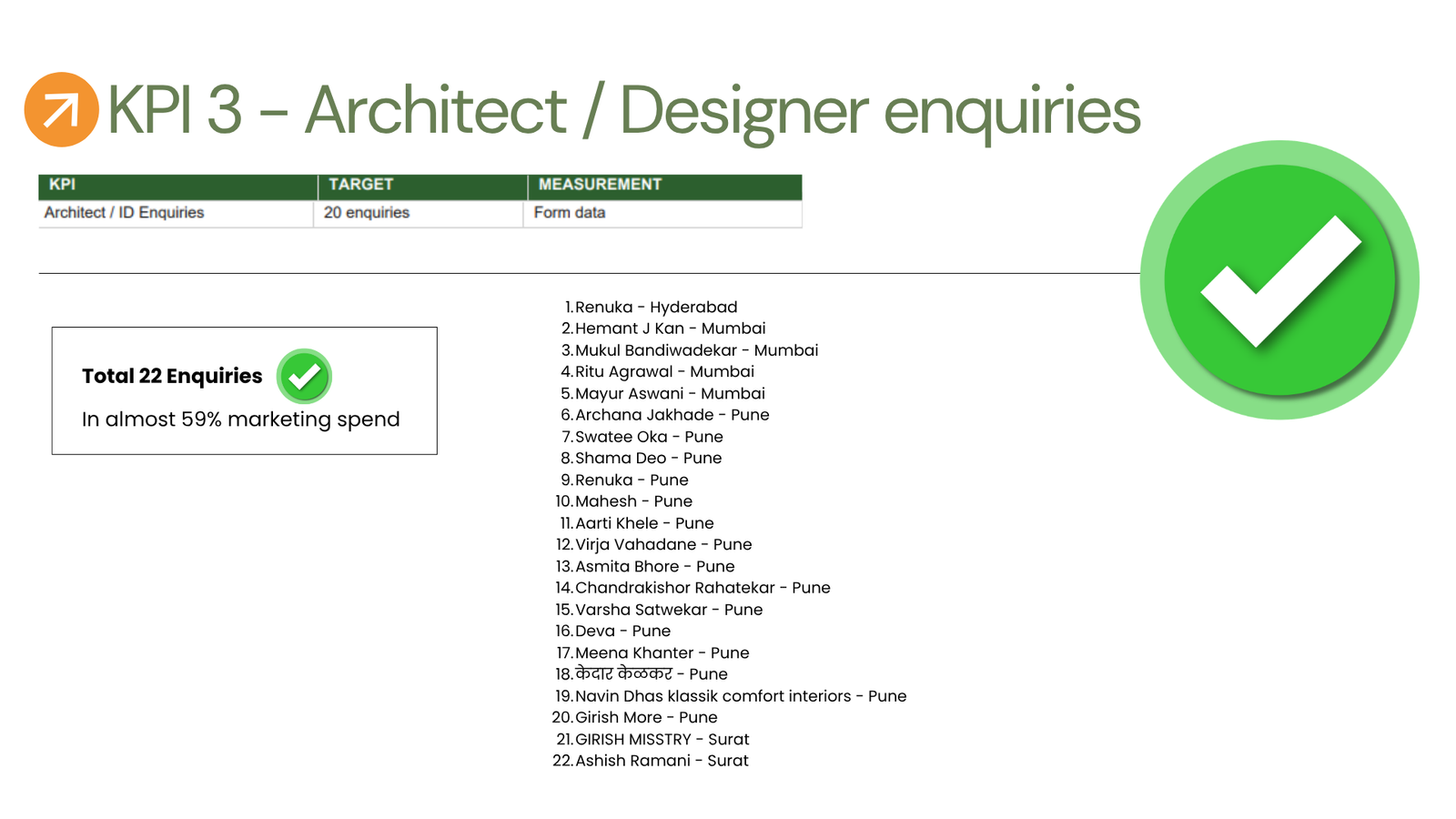
    KPI 3 architect and designer enquiries: 22 enquiries listed by name and city
    KPI 3, architect and designer enquiries, at the mid-sprint review: target of 20 already crossed, listed by name and city.
  12. Principle

    Lead quality over lead count

    Cost per qualified lead is the number that matters.

    A low cost per lead is a gimmick. It fills the CRM and empties the pre-sales team's day. LOTL Infra optimises for cost per qualified lead, which is why the qualification ratio rose while the total lead count stayed manageable.

    100 leads, 50 qualified
    Pre-sales calls 100 people. Half are worth the call.
    1,000 leads, 50 qualified
    Pre-sales calls 1,000 people for the same 50. Ten times the effort, same result.

What changed for Laze

Before the sprint, enquiries came from referrals in the head office city and the franchise outlets carried the brand name without the brand perception. After it, Laze had a gateway of new enquiries across four cities, a presentation layer that matched the quality of the product, and a second vertical of revenue that runs on a system rather than on the owner's phone.

  • Brand synopsis and guidelines frozen; every format now speaks in one voice
  • Two brand films, in use at exhibitions and at TOIFA
  • Reels, ad videos and product shoots in the content bank
  • Presentation and mobile catalogues replacing the Drive link
  • Website live and feeding the CRM
  • Google and Meta campaigns running city-wise, including franchise cities
  • CRM, call SOP, follow-up materials, daily reporting and WhatsApp automation in place
  • 72 showroom visits and 472 B2B enquiries in the CRM; qualification ratio up 108%
  • Marketing cost 30% lower than the previous agency; deals above ₹1 Cr closed from sprint enquiries
  • Handover document submitted; the system continues in-house
Case study 2 of 3

Space Attire

Exclusive furniture destination in Central India, with KUKA Home exclusivity. A new showroom in Nagpur, launched from zero with one company running the whole build while the founders stayed on operations.

  • ProgrammeBrand pre-launch, launch and post-launch, plus the full sales system built on Digital Brand Perception & Credibility
  • Duration120 days
  • LocationCentral Road, Hingna, Nagpur
  • Launch eventsTwo: a closed-door B2B preview and a grand launch
  • ChannelArchitects, interior designers, showroom walk-ins
500+
Enquiries in the CRM
5 Cr+
Revenue generated from those enquiries
50+
Enquiries before the grand launch opened its doors
75
Of the region's leading architects and designers at the closed-door B2B preview
1,000+
Dignitaries at the grand launch, including ministers and international product designers

The problem

A new showroom was being built with KUKA Home as the exclusive partner for Central India. The founders had a choice they should never have had to make: focus on operations and recruitment for the store, or focus on the launch, brand visibility, social media, website and catalogue. There was no time for both.

They were already in conversations with more than seven agencies for the various deliverables. Each one depended on another for files, timelines and approvals, which is where the clutter starts and the blame game follows. Seven vendors, seven invoices, and no one accountable for the launch as a whole.

What LOTL Infra did, in order

The whole launch, from the campaign line to the sales system, taken off the founders' desk and delivered by one company.

  1. Day 1 to 30

    Campaign line and unique proposition

    Decided before any design work.

    Space Attire does not manufacture. A product USP would have been restrictive and easy for any manufacturer to copy. The proposition was built instead on what only Space Attire could claim in the region: the exclusive destination for international furniture in Central India, with KUKA Home exclusivity. That line went on every hoarding, newspaper page, reel and press mention, so the city met one message from teaser to opening day.

  2. Day 1 to 30

    Brand synopsis

    The first document, every time.

    Who Space Attire is, what the mid-term and long-term goals are, who it sells to, how it speaks, and where it stands against the existing furniture stores in Nagpur. Frozen before production started, so every deliverable that followed spoke in one voice.

    • Space Attire in a nutshell
    • Target audience
    • Core values
    • Competitive landscape
    • Brand personality
    • Brand language and tone
    • Brand story
    • Brand positioning statement
    • Mid-term and long-term goals
  3. Day 1 to 30

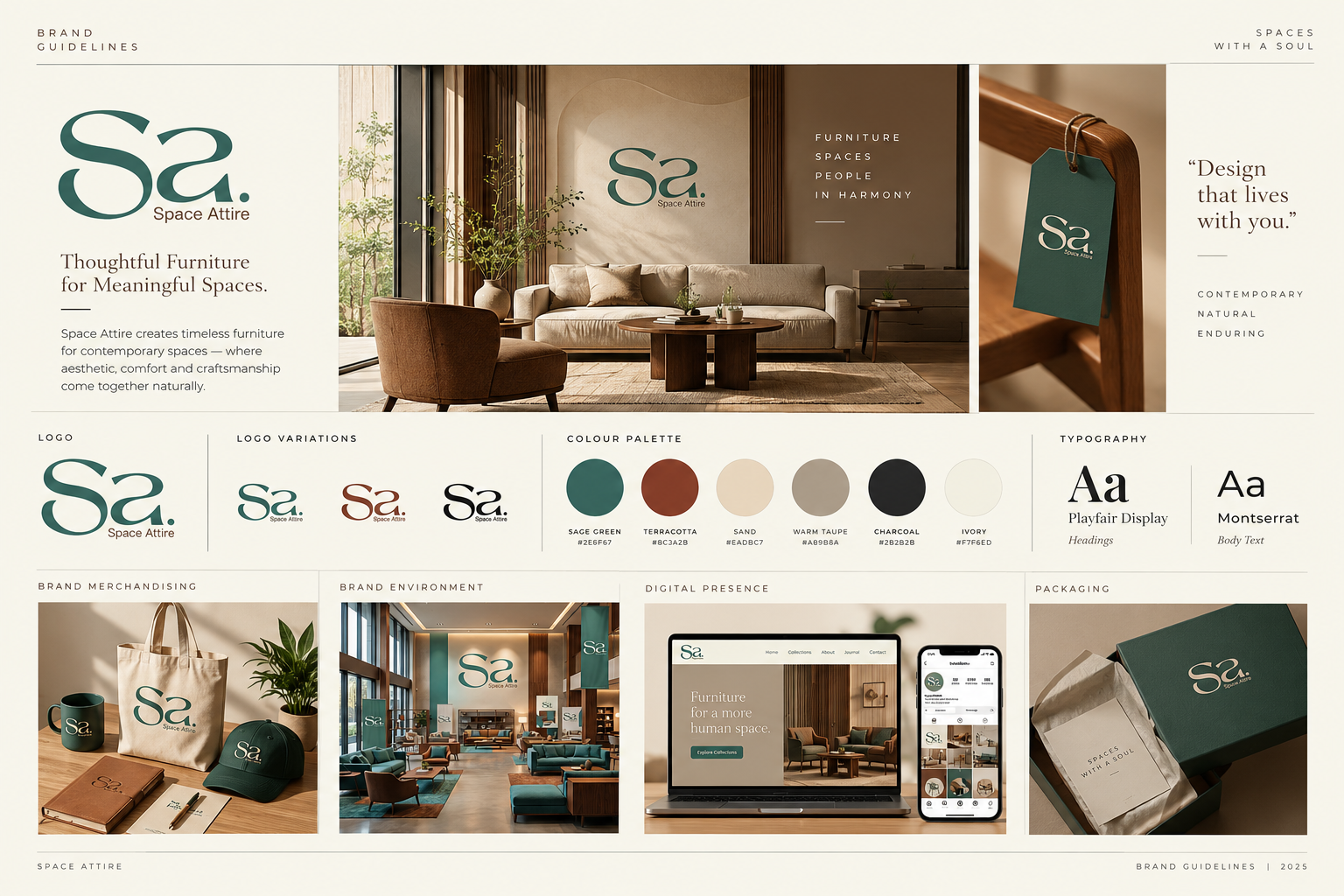
    Brand guidelines

    One design language across store, print, digital and film.

    Logo system, palette, typography, imagery direction and layout rules for a brand that had to appear on a 40-foot hoarding, a newspaper front page, an Instagram grid and a showroom facade within the same month.

    Space Attire brand guidelines: logo system, palette, typography and imagery direction
    Brand guidelines snapshot.
  4. Day 31 to 60

    Brand film

    The story of the store, cut for the launch and for the digital campaign.
    0:00
    Space Attire brand film.
  5. Day 31 to 75

    Pre-launch reel sequence

    Released in this order. Each reel had one job.

    The city was introduced to Space Attire in stages: a teaser on the hoardings, a reveal-soon countdown, the reveal itself, then a protagonist story that set up the problem Nagpur buyers face and showed the store as the answer. Play them in order.

    0:00
    Teaser hoarding reel. The first thing the city saw.
    0:00
    Reveal soon reel. Countdown to the name.
    0:00
    Reveal reel. Space Attire named and located.
    0:00
    Protagonist reel, problem statement. Buying furniture in Nagpur before Space Attire.
    0:00
    Protagonist reel. The store as the answer.
    0:00
    Problem statement to solution reel. The short cut for ads.
    0:00
    Brand reel. Product and space.
  6. Day 45 to 90

    Influencer marketing

    Hook reels first, then the launch wave.

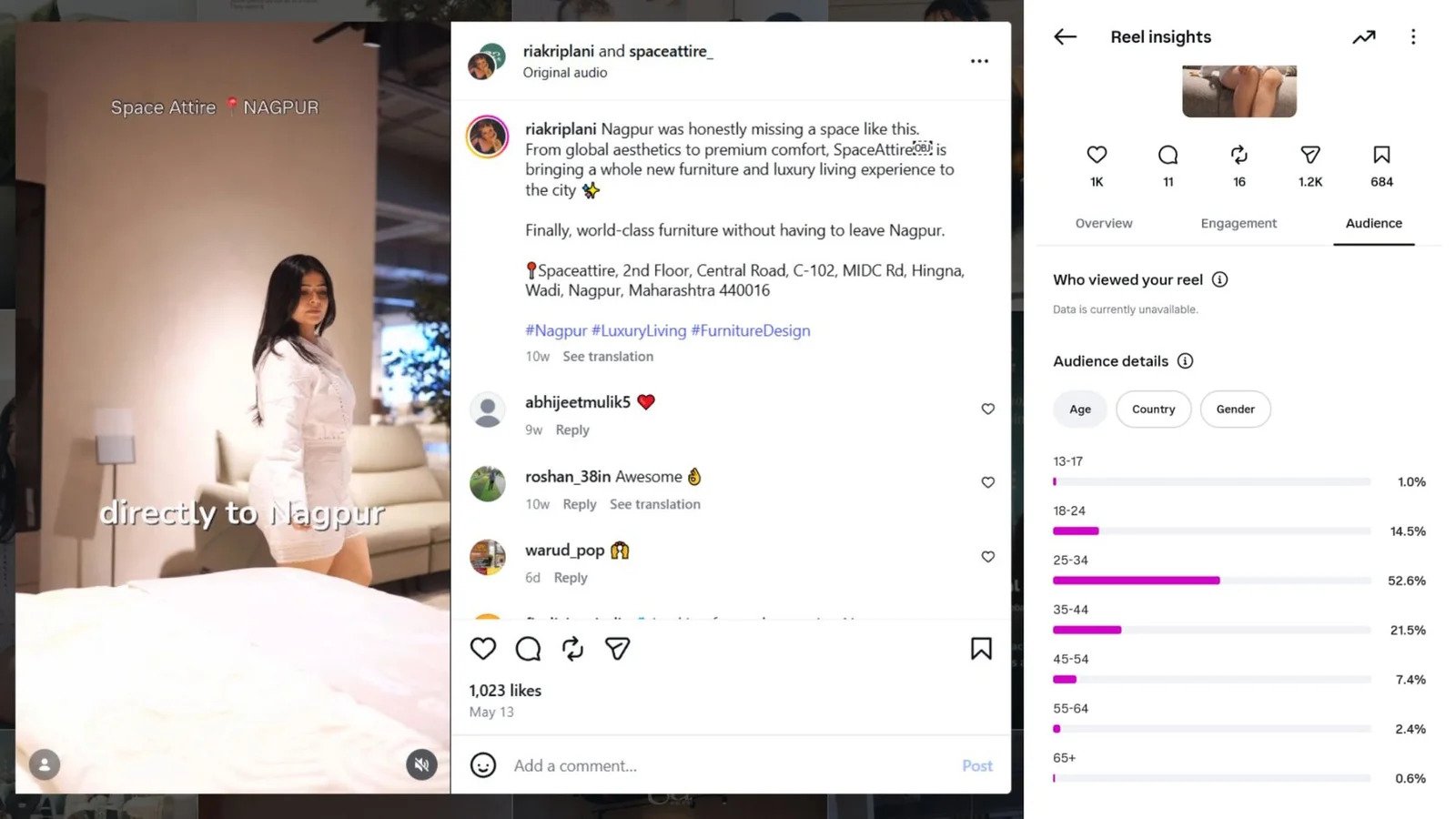
    Influencers were briefed on the same campaign line and released in sequence: two hook reels to build curiosity, a store-visit reel, and a mass reel timed to the grand launch. The reach was organic. One reel alone crossed 1,000 likes and 1,200 shares, with 53% of viewers in the 25 to 34 bracket.

    0:00
    Hook influencer reel 1.
    0:00
    Hook influencer reel 2.
    0:00
    Influencer reel. Store visit.
    0:00
    Mass launch influencer reel. Timed to opening day.
    Instagram insights for an influencer reel: 1,000 likes, 1,200 shares, audience 25 to 34 at 52.6 percent
    Organic reach and audience split on one influencer reel.
  7. Day 45 to 90

    360-degree launch campaign

    Hoardings, print, digital, influencers and press on one line.

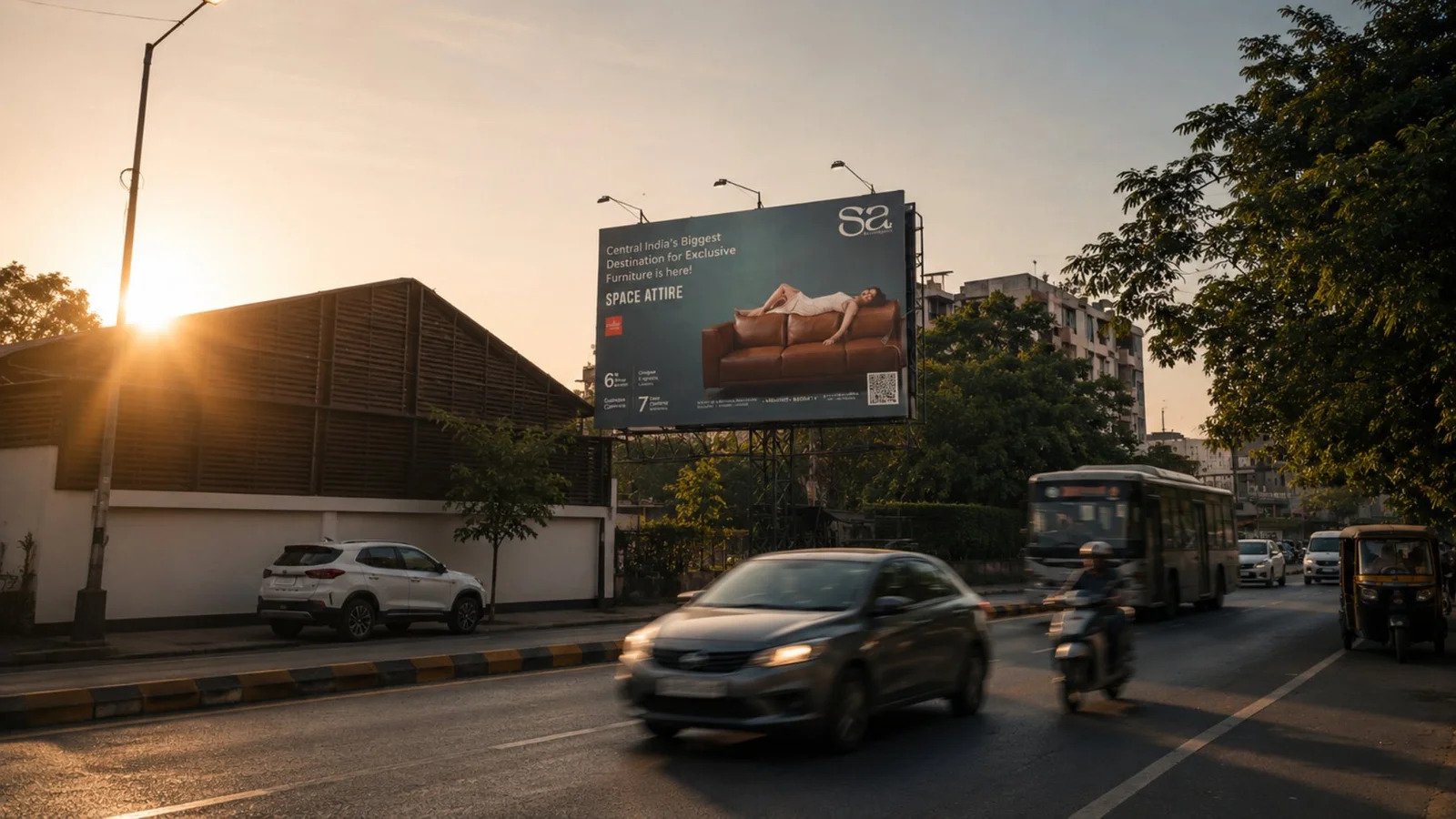
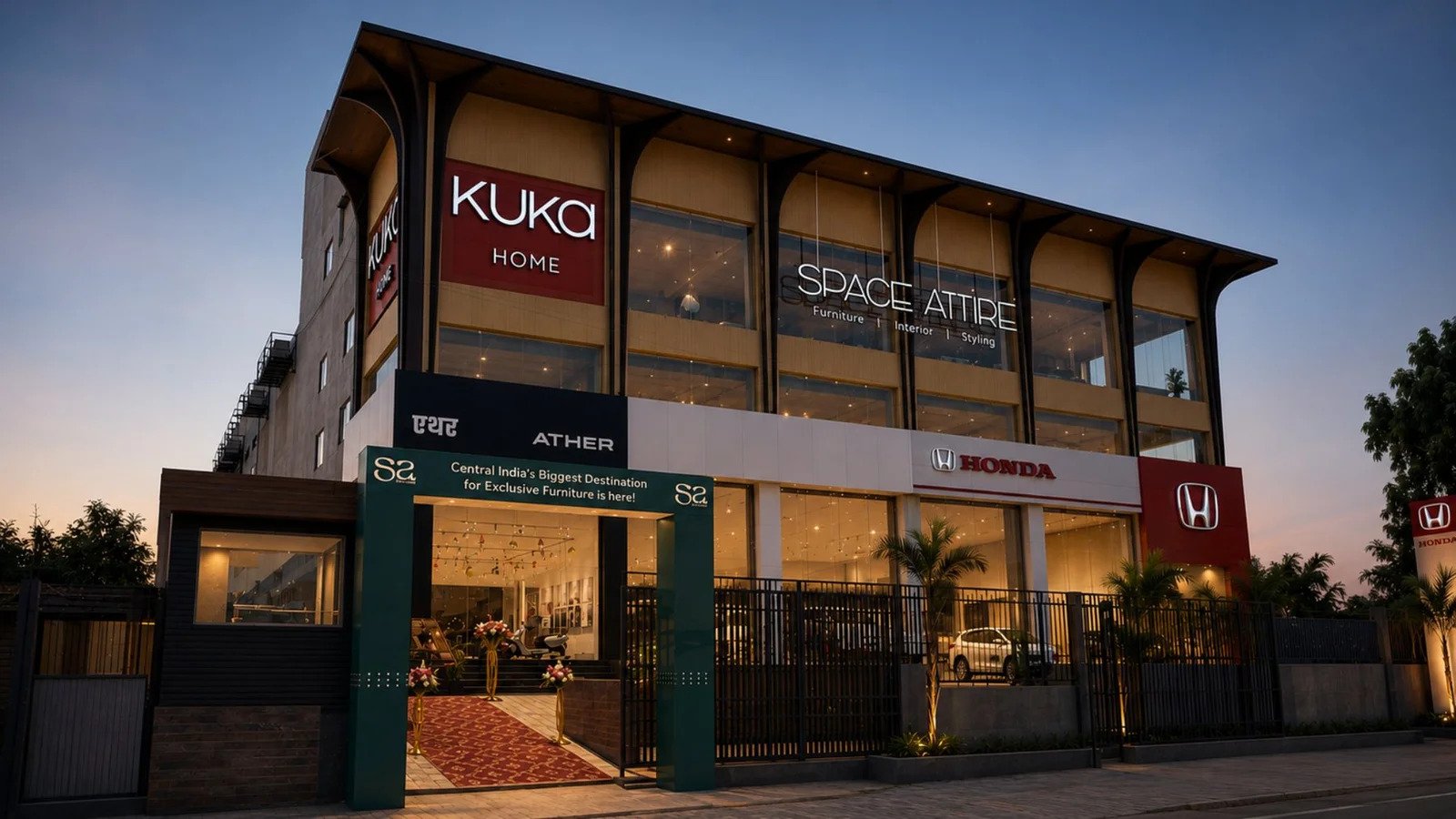
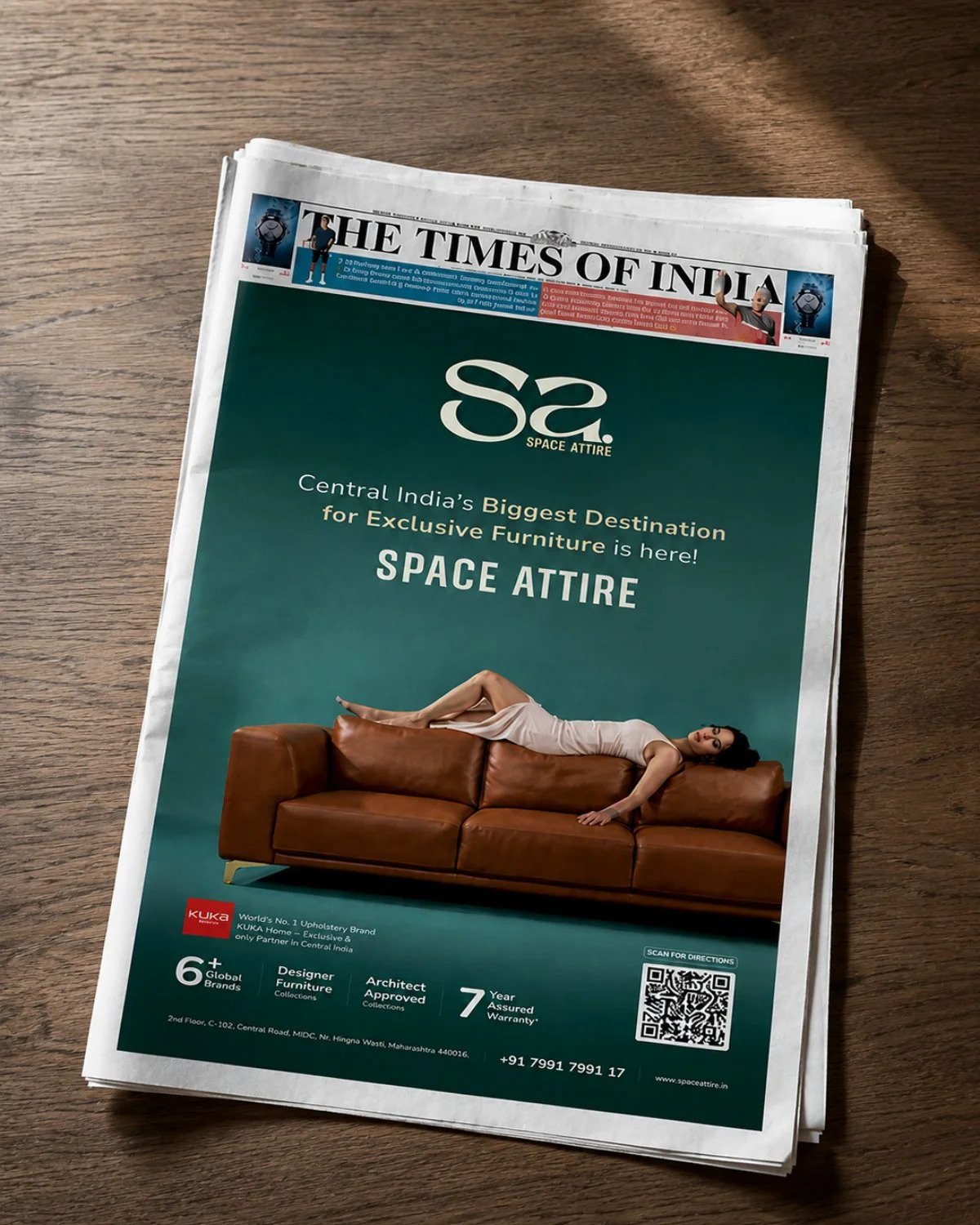
    One campaign, one message, every surface the city looks at. Teaser hoardings on the main roads, front-page newspaper advertising in the Times of India on launch week, the digital sequence above, influencer reels and press coverage. The showroom facade was treated as the final hoarding.

    Space Attire launch hoarding on a Nagpur main road at dusk
    Launch hoarding, Nagpur.
    Space Attire and KUKA Home showroom facade at night
    Showroom facade, Central Road, Hingna.
    Times of India front-page advertisement for Space Attire
    Newspaper advertising, launch week.
  8. Day 1 onwards

    Social media

    Designed, scheduled and posted under the guidelines.

    The grid was live from the teaser phase, so the profile was already full when the reveal reels sent people to it. Product, space, campaign and event posts in one visual system.

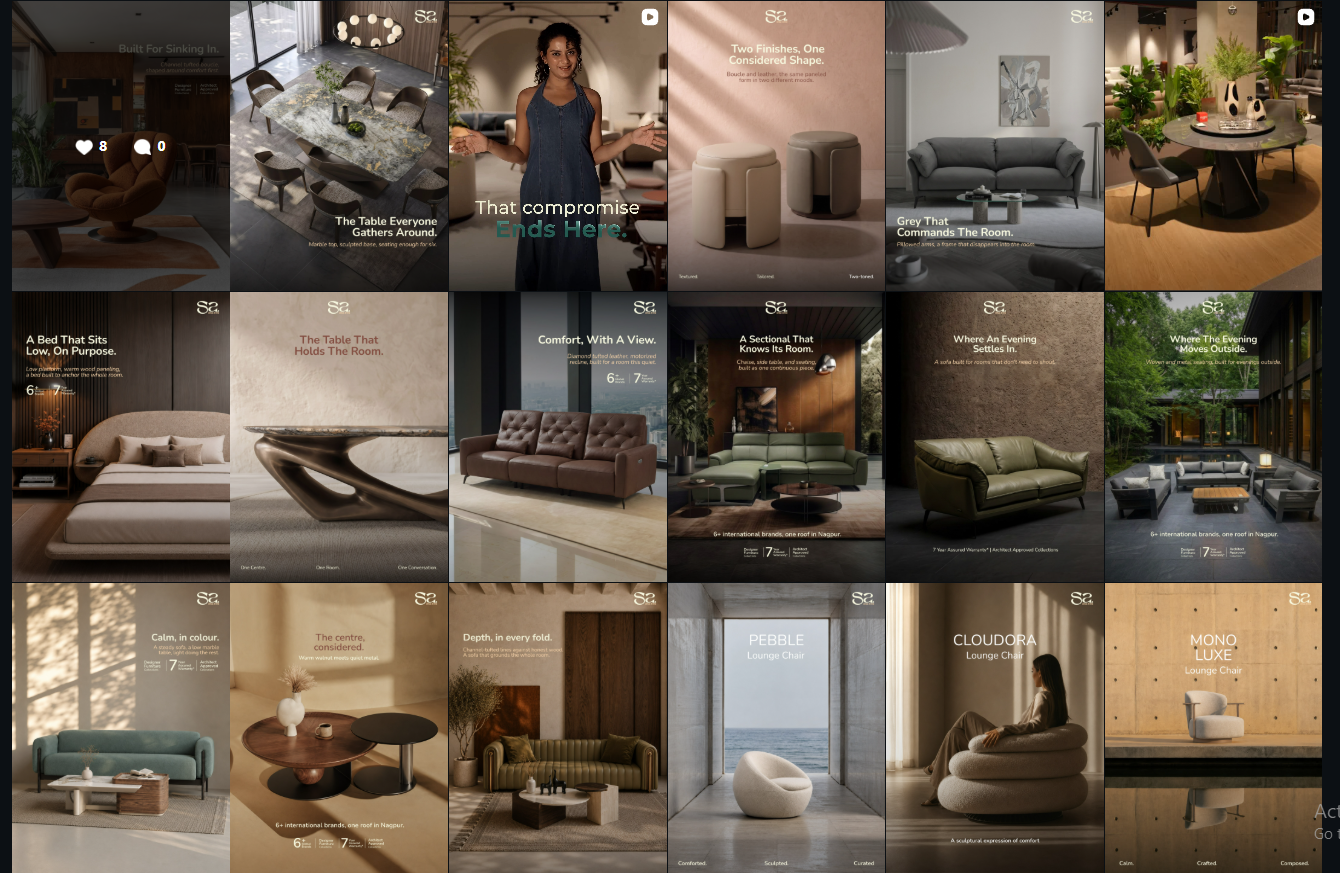
    Space Attire Instagram grid
    Instagram grid.
  9. Day 31 to 60

    Catalogue

    Presentation format for architects, mobile format for WhatsApp.

    Collections organised by room and by brand partner, with KUKA Home carrying its own section. Built to be sent within seconds of an enquiry.

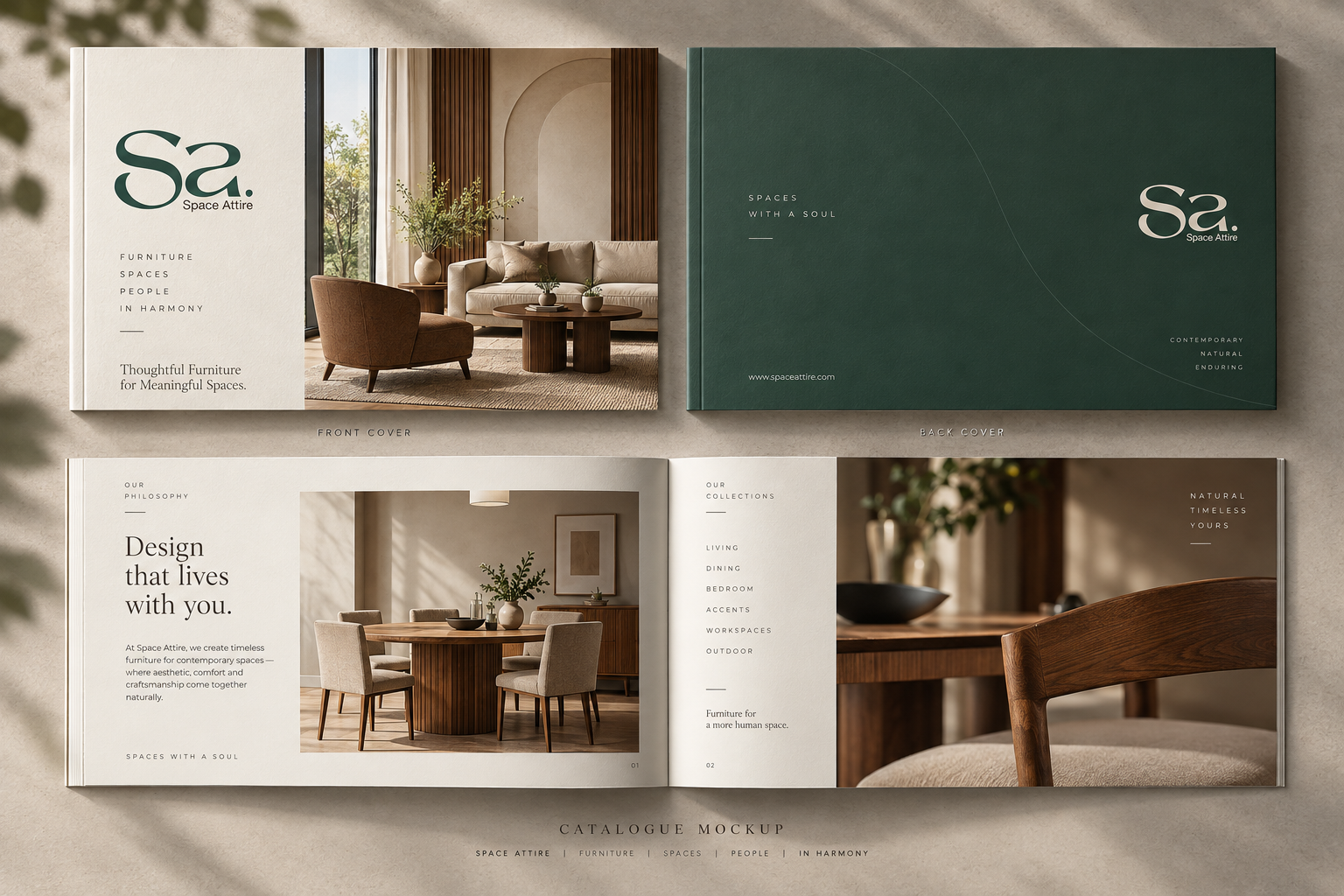
    Space Attire catalogue spreads
    Catalogue spreads.
  10. Day 31 to 60

    Website

    Live before the doors opened, with every form feeding the CRM.

    Collections, brand partners, store location and enquiry forms, so that the hoardings and newspaper QR codes had somewhere to land and every visit was captured.

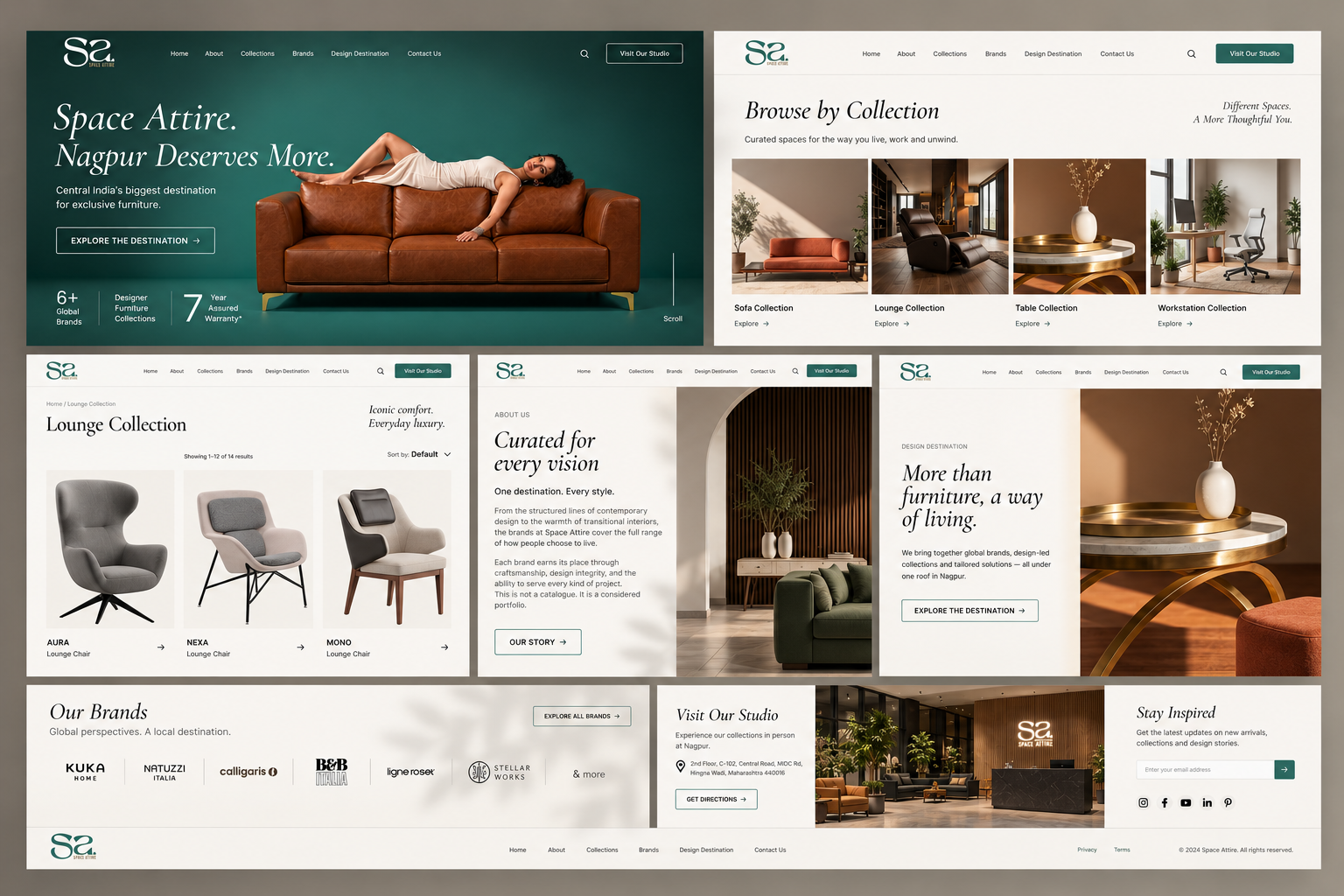
    Space Attire website screens
    Website screens.
  11. Event 1

    B2B architect preview

    75 of the region’s leading architects and designers, closed doors.

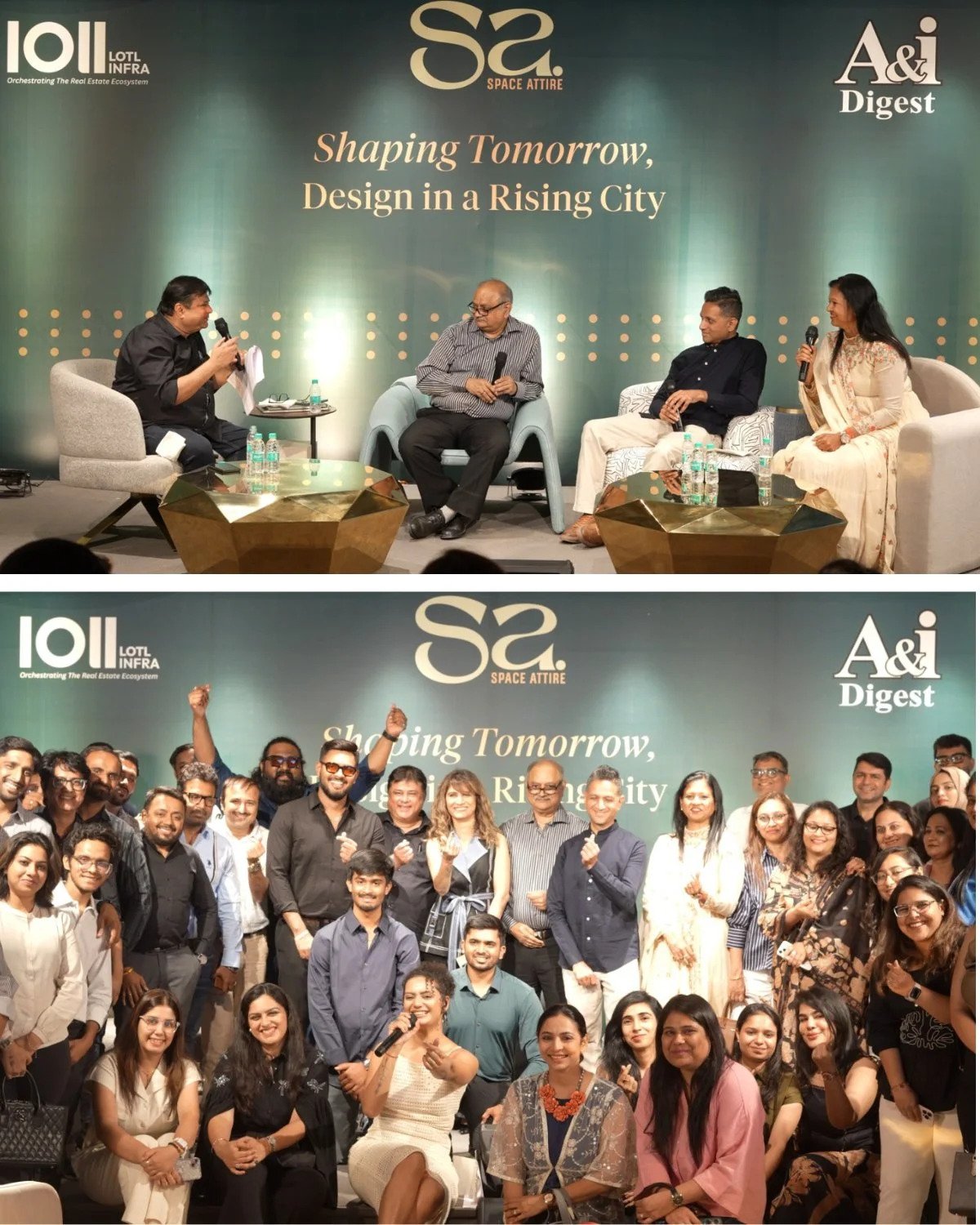
    Before the public launch, the store opened for one evening to 75 architects and interior designers from Nagpur and Central India, with a panel conversation on design in a rising city held with A&i Digest. The trade saw the store first, met the founders, and left with the catalogue and a direct line. Architect enquiries began that night.

    B2B architect gathering at Space Attire with A&i Digest panel and group photo
    B2B preview: panel and the architect gathering.
    0:00
    B2B event bytes 1. Architect reactions.
    0:00
    B2B event bytes 2.
  12. Event 2

    Grand launch

    1,000+ dignitaries, including ministers and international product designers.

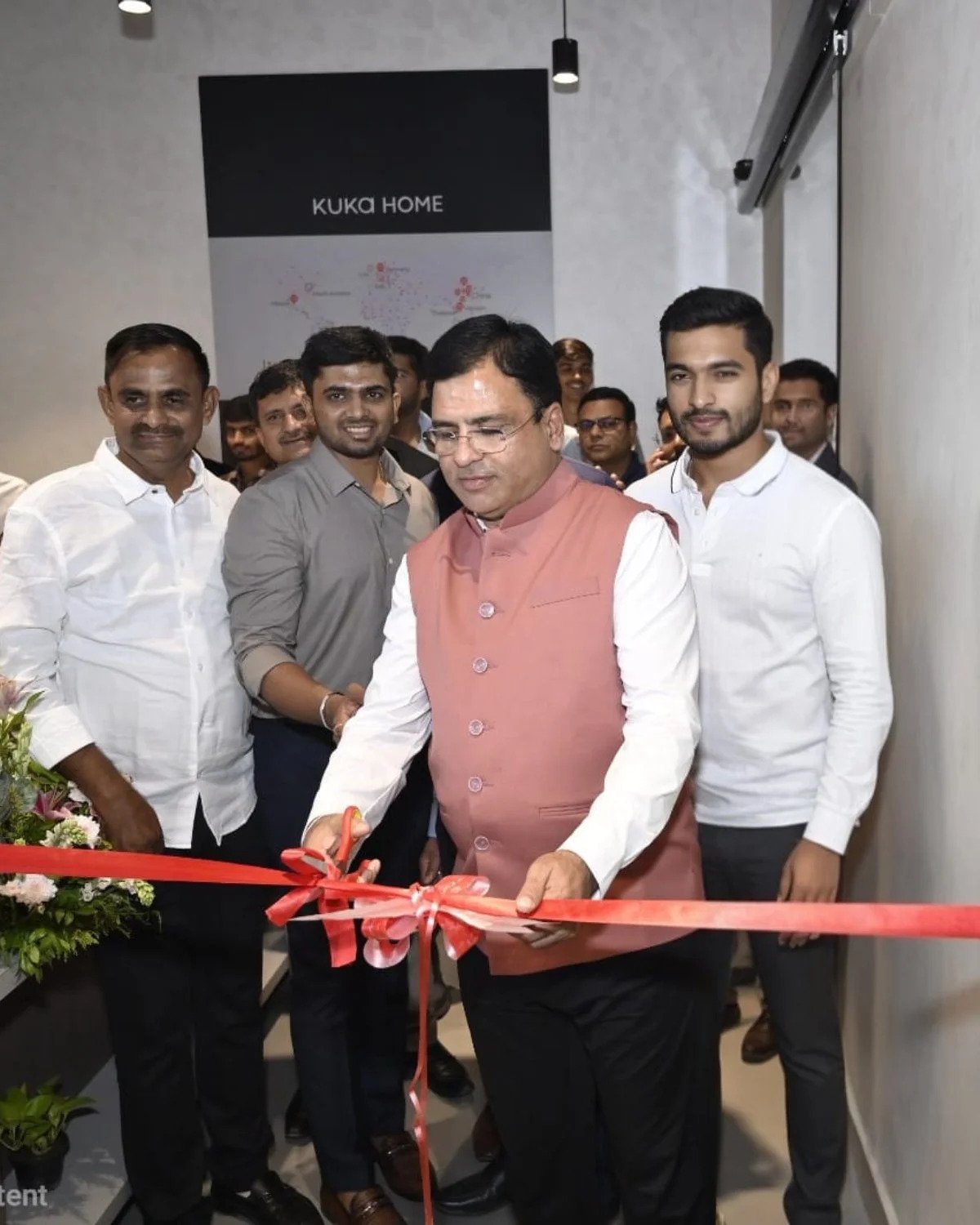
    The public opening. Ribbon cutting with ministers, KUKA Home and international product designers in attendance, press on site, and the campaign line on the facade behind them. More than 50 enquiries were already in the CRM before the doors opened.

    Grand launch ribbon cutting at Space Attire
    Grand launch, opening day.
    0:00
    Launch video snippets.
  13. Day 45 onwards

    Digital marketing setup

    Google and Meta.

    Meta carried the reel sequence and the influencer content to Nagpur and Central India audiences in the exact release order above, then switched to lead forms and WhatsApp click-to-chat from launch week. Google search caught the direct intent the hoardings and newspaper created. Every enquiry landed in one CRM.

    Google

    Search campaigns on furniture and brand-partner intent for Nagpur and the surrounding districts. Retargeting for site visitors.

    Meta

    Reel and influencer creatives to homeowner, architect and designer audiences. Lead forms and WhatsApp click-to-chat from launch week. Retargeting in days 91 to 120.

  14. Day 31 to 90

    Sales system setup

    CRM, pre-sales SOP, follow-up materials, daily reporting.

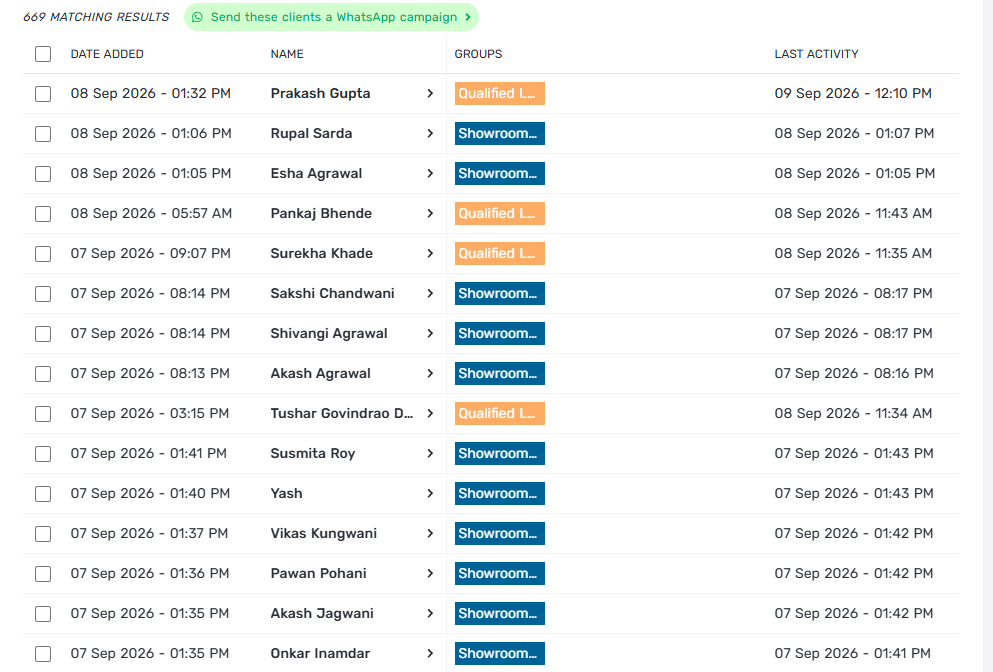
    Every enquiry from the website, Meta, Google, the hoardings and the events flows into one CRM and is worked through a fixed pipeline: acknowledged, called, showroom visit scheduled, visit done, qualified. The founders were not on the calls. They read the dashboard and closed.

    CRM screenshot showing Space Attire leads with showroom visit and qualified tags
    CRM view. Leads tagged Showroom Visit and Qualified.

    Call pitch SOP

    A written script and qualification questions for the pre-sales team, so every first call sounds like the brand and captures the same data.

    Follow-up materials

    Mobile catalogue, store location and brand-partner material, ready to send from the CRM after the first call.

    Daily reporting

    A daily status of new leads, calls made, visits booked and qualification outcomes, reviewed with the pre-sales team.

    Founder time

    Zero hours on the launch build. The founders stayed on operations and recruitment for the new showroom while the whole thing went live.

  15. Day 61 onwards

    WhatsApp marketing

    The part most brands skip.

    Every enquiry receives an acknowledgement on WhatsApp the moment it comes in, with the store introduction, location and the mobile catalogue. By the time pre-sales calls, the person already knows Space Attire and has seen the collections.

    When a segment goes cold, one bulk WhatsApp campaign from the CRM revives it at once, without the pre-sales team calling each contact individually.

    Why WhatsApp works for this audience: architects, designers and busy homeowners want to text. They do not want to take a call from an unknown number. Meeting them on WhatsApp first turns the later call into a warm one.
  16. Measured

    Tangible output

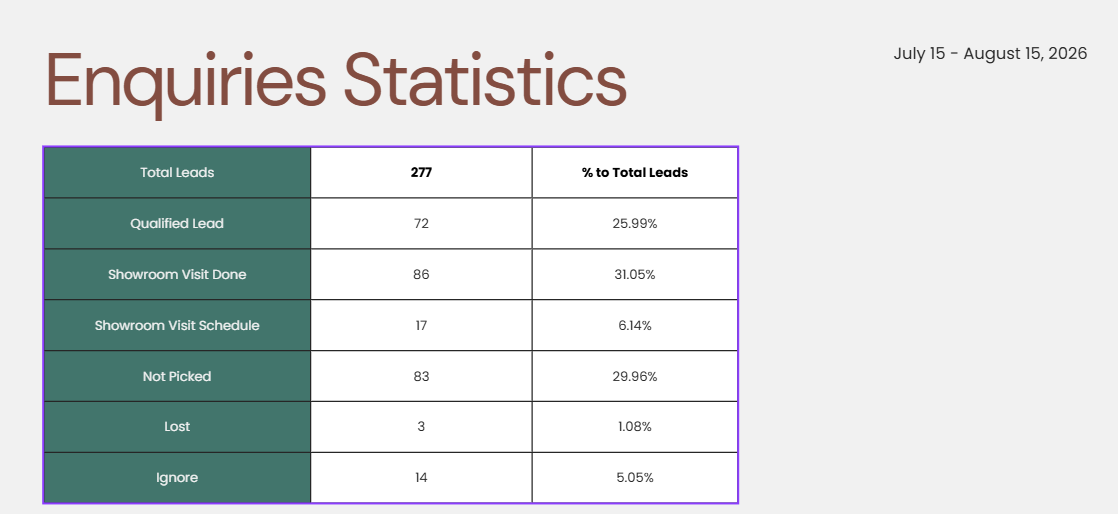
    Enquiry statistics from the CRM.

    One month of post-launch data, 15 July to 15 August 2026: 277 enquiries, 72 qualified, 86 showroom visits completed and 17 more scheduled. Across the full programme the CRM crossed 500 enquiries and the store closed more than ₹5 Cr in revenue from them.

    Enquiry statistics table: 277 total leads, 72 qualified, 86 showroom visits done, 17 scheduled
    Enquiry statistics, 15 July to 15 August 2026.
  17. Recognition

    Nagpur Changemakers 40

    Awarded during the sprint.

    Space Attire was honoured among Nagpur’s 40 Changemakers and received the award from Shri Nitin Gadkari, Union Minister for Road Transport and Highways. The recognition came within the launch window and went straight back into the campaign.

    0:00
    Nagpur Changemakers 40. Award ceremony.

What changed for Space Attire

Space Attire opened as a known name, not a new one. The city had seen the hoardings, read the newspaper page, followed the reveal and met the store on Instagram before the doors opened. The trade had been inside first. And the founders spent the launch window on the store, not on the launch.

  • Campaign line, synopsis and guidelines frozen; one message on every surface
  • Brand film, pre-launch reel sequence and influencer wave released in order
  • Hoardings, newspaper, facade, social, catalogue and website live before opening day
  • B2B architect preview with 75 architects and designers; grand launch with 1,000+ dignitaries
  • 50+ enquiries before the doors opened; 500+ in the CRM across the programme
  • Revenue above ₹5 Cr generated from sprint enquiries
  • CRM, call SOP, daily reporting and WhatsApp automation running without founder involvement
  • Nagpur Changemakers 40 recognition, received from Shri Nitin Gadkari
Case study 3 of 3

Furniture Creations by UCD

A product-design brand from the founder of Utopia Choice Design, an architecture practice in Navi Mumbai. Launched at Design POV 2026, Jio World Convention Centre, Mumbai.

  • ProgrammeBrand launch at Design POV, with Digital Perception & Credibility and the full sales system
  • Duration120 days
  • LocationNavi Mumbai
  • LaunchDesign POV, 15 to 17 May 2026, Jio World Convention Centre
  • ChannelArchitects and interior designers
40+
Qualified enquiries generated before the main launch
3
Sales closed, the first pieces sold before Design POV opened its doors
5
Renowned Mumbai and Pune architects on record as launch collaborators
Day 1
Sales system live before the exhibition, so no enquiry was lost

The problem

The founder runs Utopia Choice Design, an architecture practice, and launched herself as a product designer with Furniture Creations by UCD. She was managing the brand alone: sending the catalogue, doing pre-sales, posting, following up, on top of the practice.

An architect can design a collection. Scaling a brand single-handed while running a practice is a different job, and she was stuck in it. What she wanted was a partner who would take the brand and set up the system, so that her time went back to architecture, product innovation and quality.

What LOTL Infra did, in order

The same build as Laze, with one difference: every priority was set by the launch date at Design POV, the exhibition for a brand from Navi Mumbai.

  1. Day 1 to 30

    Brand synopsis

    The first document, every time.

    Who Furniture Creations by UCD is, how it relates to the Utopia Choice Design practice, what the founder wants the brand to become, who it sells to and how it speaks. With one person carrying both an architecture practice and a product brand, this document is what let LOTL Infra take the brand off her desk without the voice drifting.

    • UCD in a nutshell
    • Target audience
    • Core values
    • Competitive landscape
    • Brand personality
    • Brand language and tone
    • Brand story
    • Brand positioning statement
    • Mid-term and long-term goals
  2. Day 1 to 30

    Logo and brand guidelines

    A new mark and one design language for the launch.

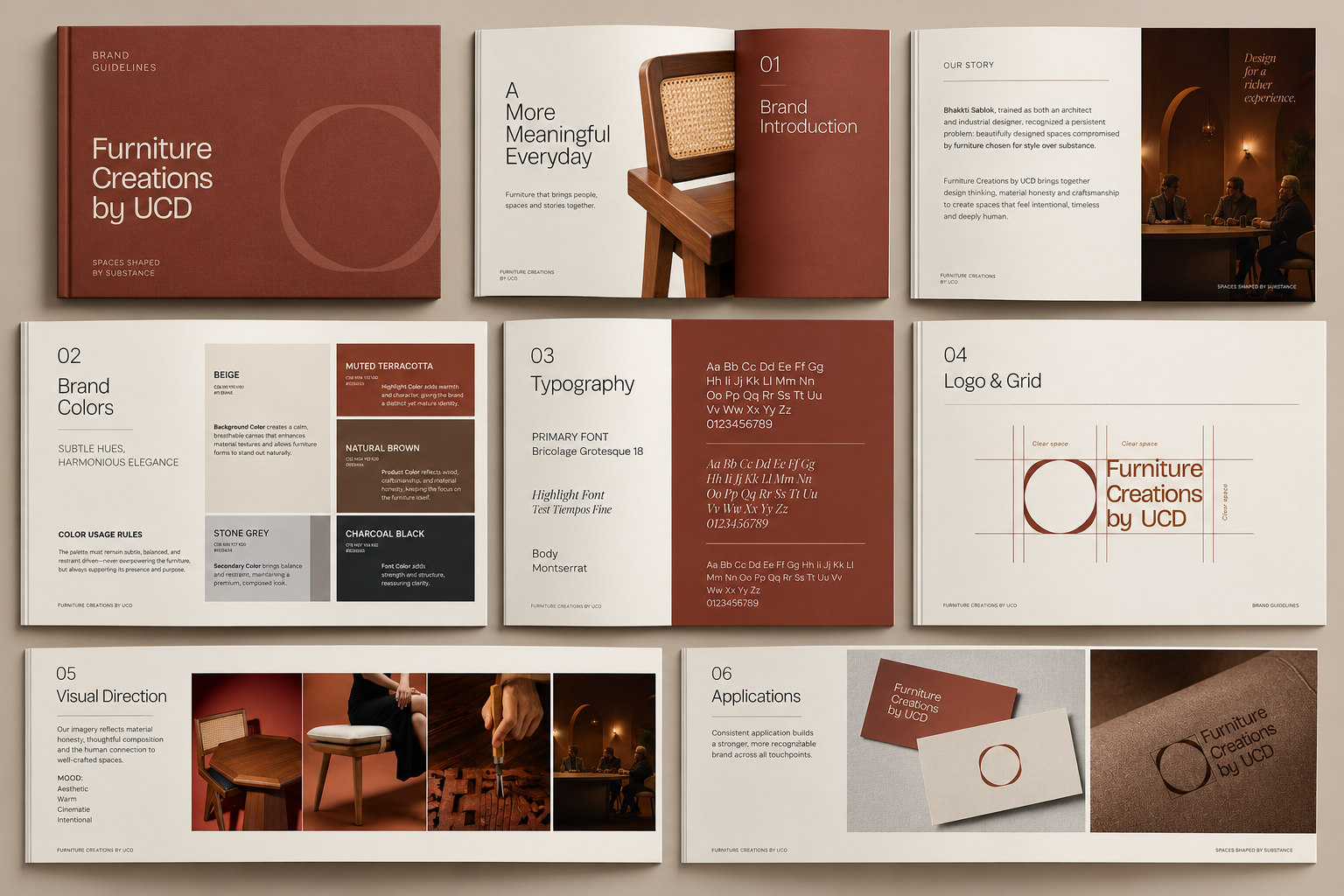
    The logo was built for a product brand, distinct from the architecture practice it came from. Palette, typography, imagery direction and layout rules followed, so the stall, the catalogue, the reels and the website all read as one brand on the exhibition floor.

    Furniture Creations by UCD brand guidelines
    Brand guidelines snapshot.
  3. Day 31 to 60

    Photoshoots

    Founder, process and product.

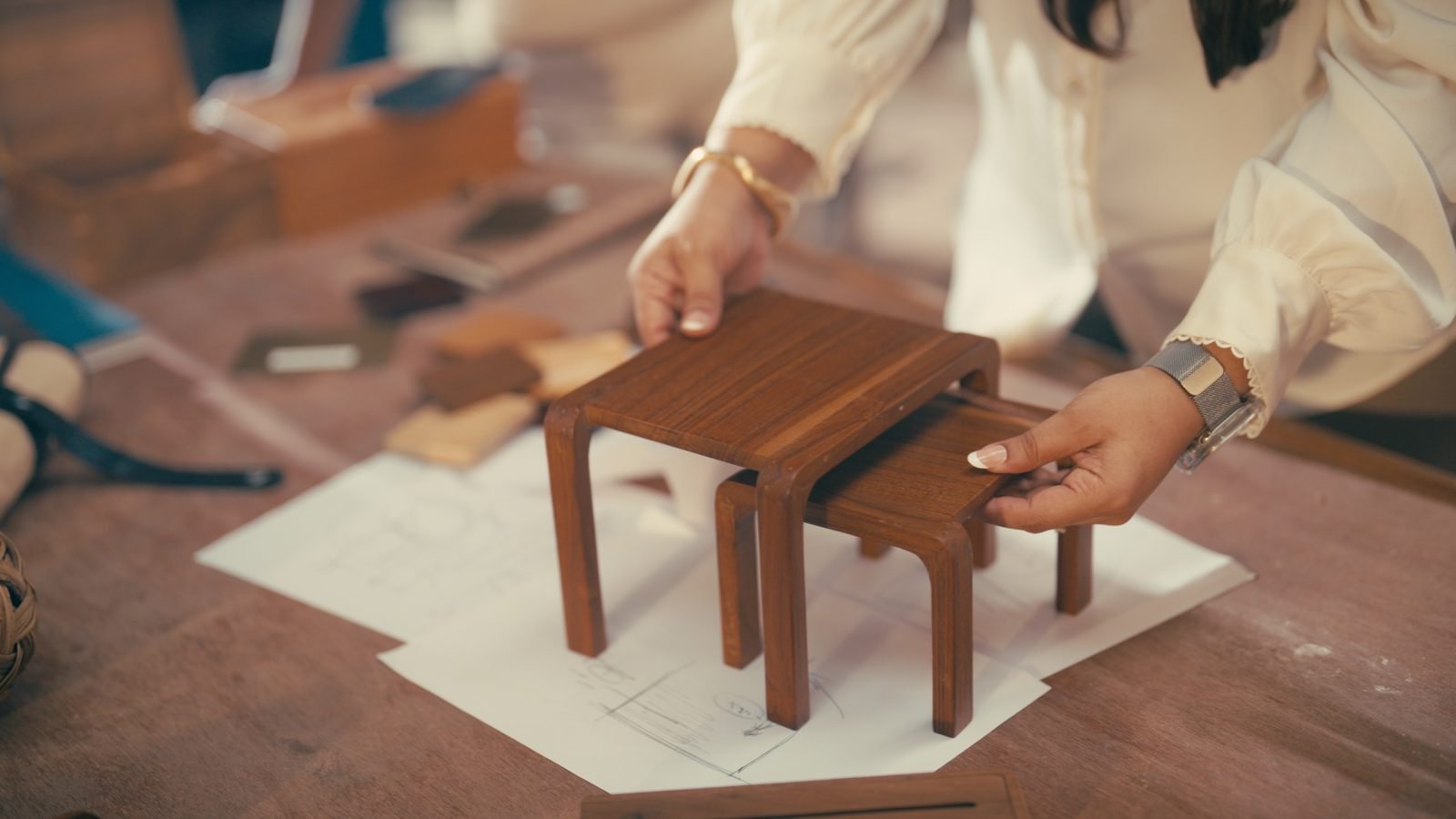
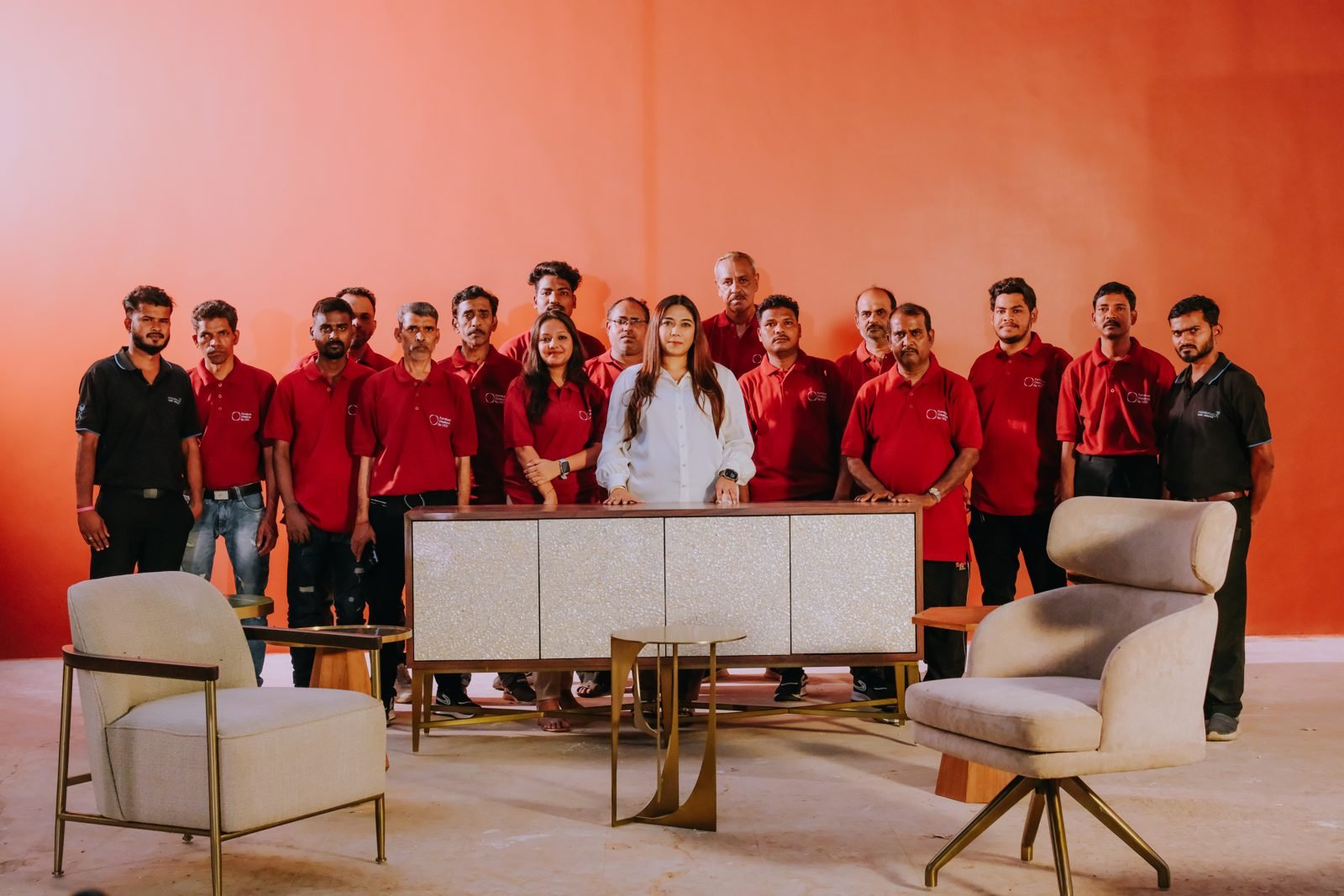
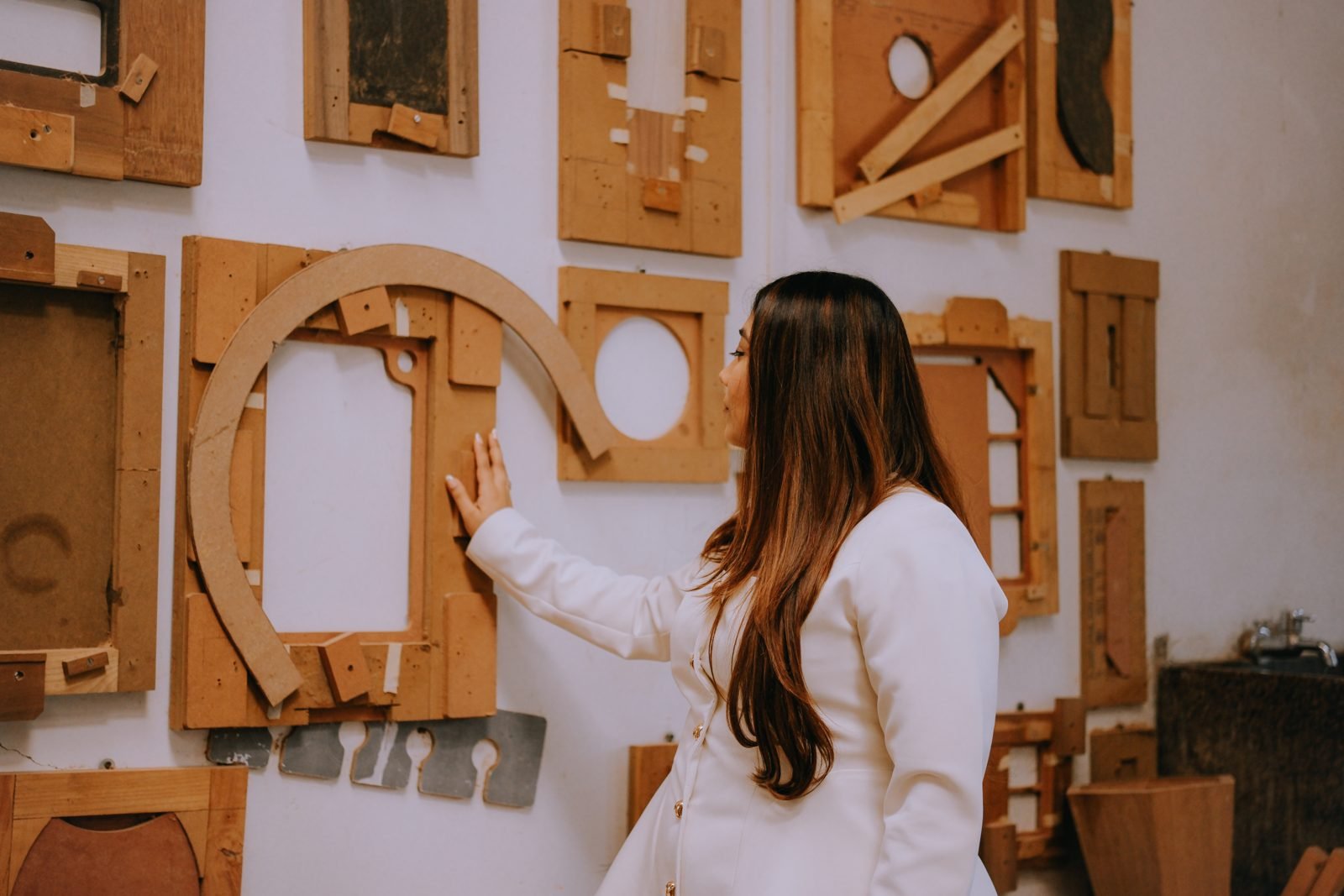
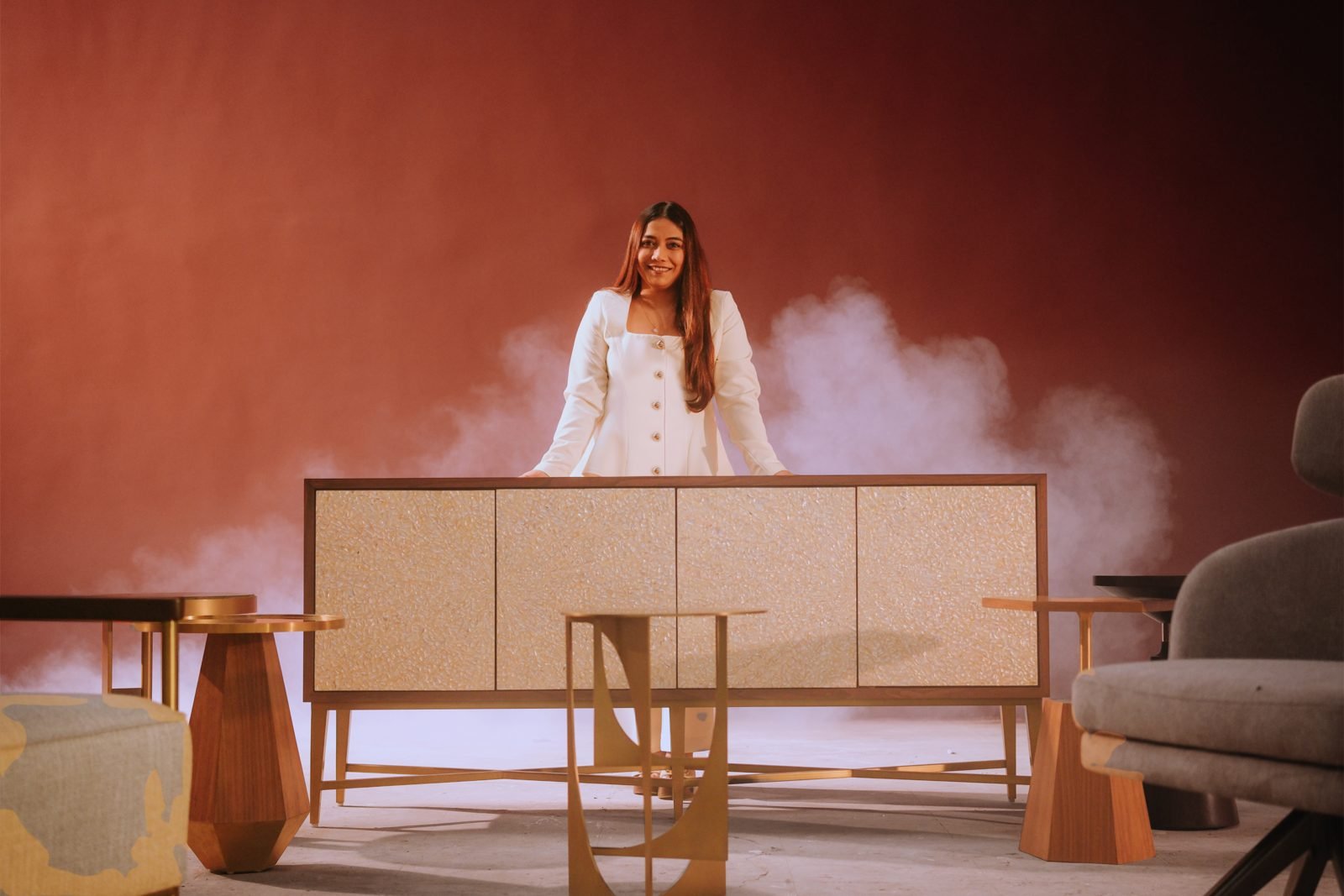
    Three sets in one production window: the founder at work, the making process in the workshop, and the collection on set. These images run through the catalogue, the website, the stall graphics and the launch social media.

    Furniture Creations by UCD photoshoot 1Furniture Creations by UCD photoshoot 2Furniture Creations by UCD photoshoot 3Furniture Creations by UCD photoshoot 4Furniture Creations by UCD photoshoot 5Furniture Creations by UCD photoshoot 6Furniture Creations by UCD photoshoot 7Furniture Creations by UCD photoshoot 8
  4. Day 31 to 60

    Brand film

    The founder, the practice and the reason for the brand.
    0:00
    Furniture Creations by UCD brand film.
  5. Day 31 to 60

    Company profile and catalogue

    Presentation format for meetings, mobile format for WhatsApp.

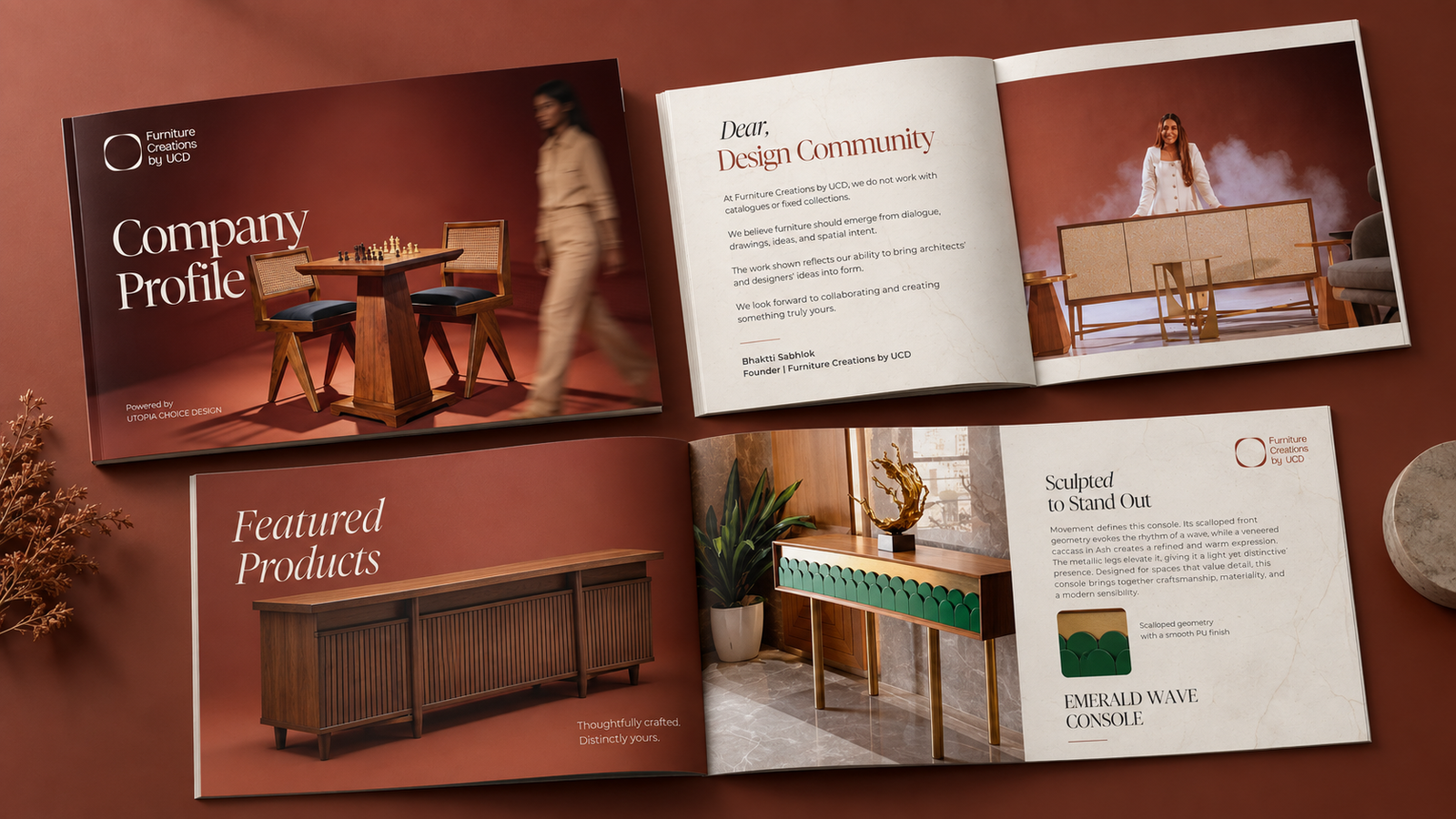
    Before the sprint the founder was sending the catalogue herself. The profile introduces the practice and the brand in one document; the catalogue carries the featured collection with materials and dimensions. Both were ready before Design POV so every stall conversation ended with something to send.

    Furniture Creations by UCD company profile and catalogue spreads
    Company profile and catalogue spreads.
  6. Day 31 to 75

    Design POV strategy and collaterals

    The exhibition as a data-capture exercise.

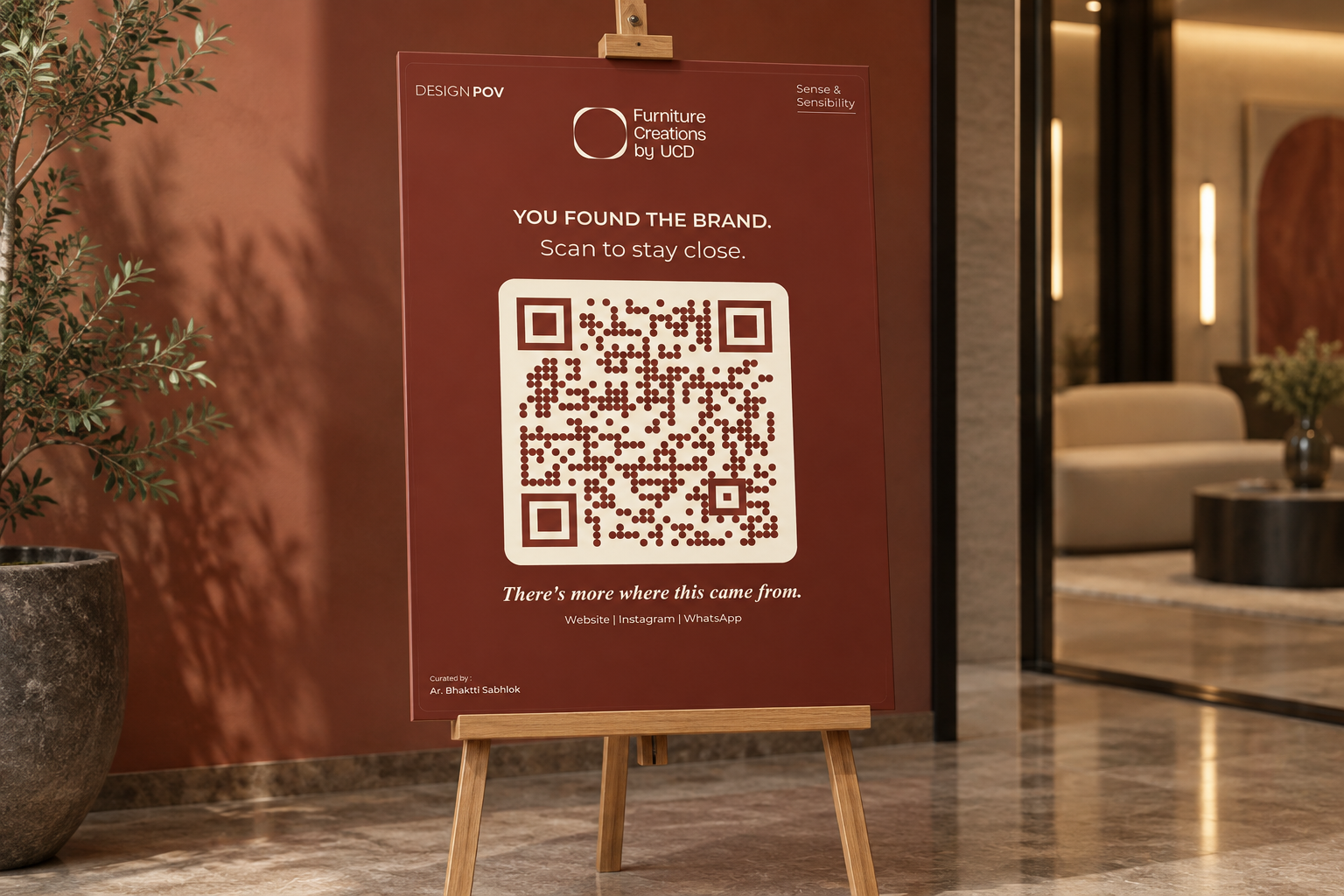
    Design POV was the launch, so the stall had to do more than display. Every collateral carried a QR that captured the architect or designer at the stall directly into the CRM, and pushed the website and social media onto their phone. That list is what the post-exhibition follow-up and WhatsApp retargeting ran on.

    Design POV stall collaterals with QR code for architect data capture
    Stall collaterals with QR capture.
  7. Day 45 to 75

    Stall design

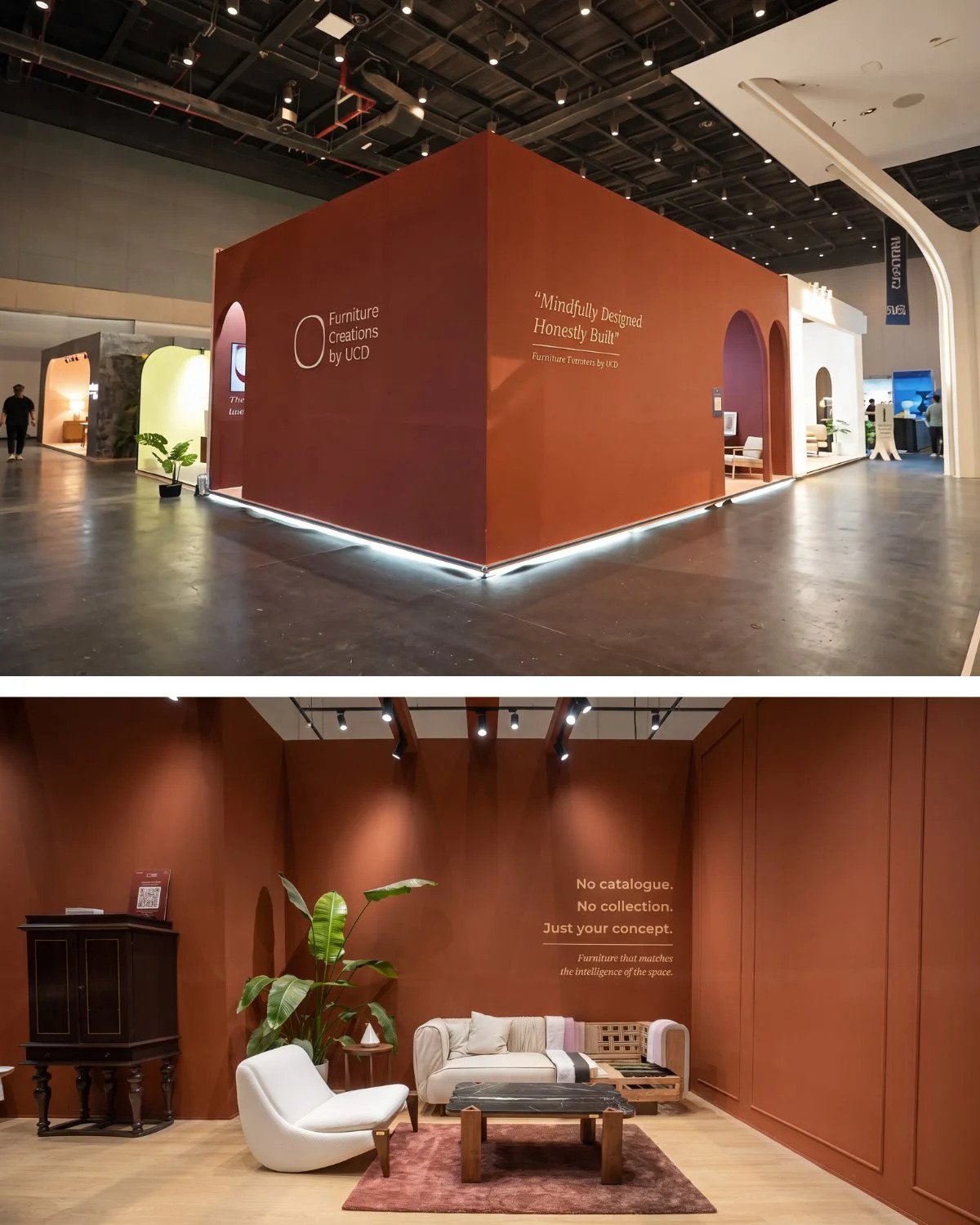
    Designed to be photographed.

    The stall was built around the brand colour and the featured collection, with the founder’s process on the walls. It was designed so that every reel shot inside it, by the brand or by visiting architects, carried the brand without a logo in frame.

    Furniture Creations by UCD stall at Design POV
    Stall design and graphic work, Design POV.
  8. Day 60 to 75

    Design POV teasers and architect collab teasers

    Released in this order before the doors opened.

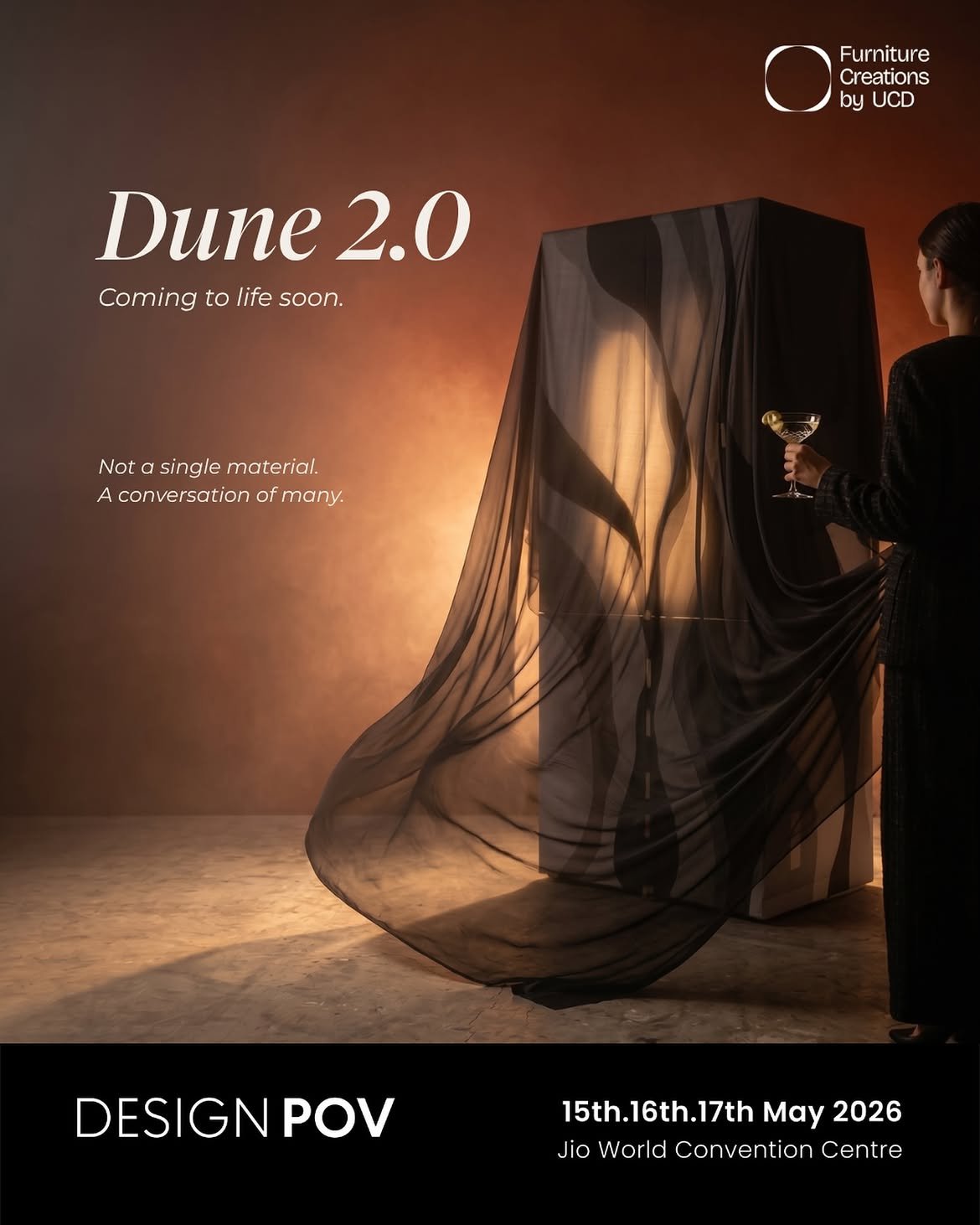
    Two teasers announced the launch at Design POV and the featured collection. Two collaboration teasers then introduced the architects who had chosen to be on record as launch collaborators, so their networks arrived at the stall already knowing the brand.

    Design POV teaser: Dune 2.0 coming to life soon, 15 to 17 May 2026, Jio World Convention Centre
    Launch teaser.
    0:00
    Design POV teaser 1.
    0:00
    Design POV teaser 2. Featured collection.
    0:00
    Architect collab teaser 1.
    0:00
    Architect collab teaser 2.
  9. During Design POV

    Architect collaboration reels

    Five renowned Mumbai and Pune architects on record.

    Shot at the stall over the three days. Architects and designers spoke about the collection on camera, which turned the exhibition into content that kept working after it closed.

    0:00
    Architect collaboration reel 1, Design POV.
    0:00
    Architect collaboration reel 2, Design POV.
    0:00
    Architect collaboration reel 3, Design POV.
    0:00
    Snippets from Design POV.
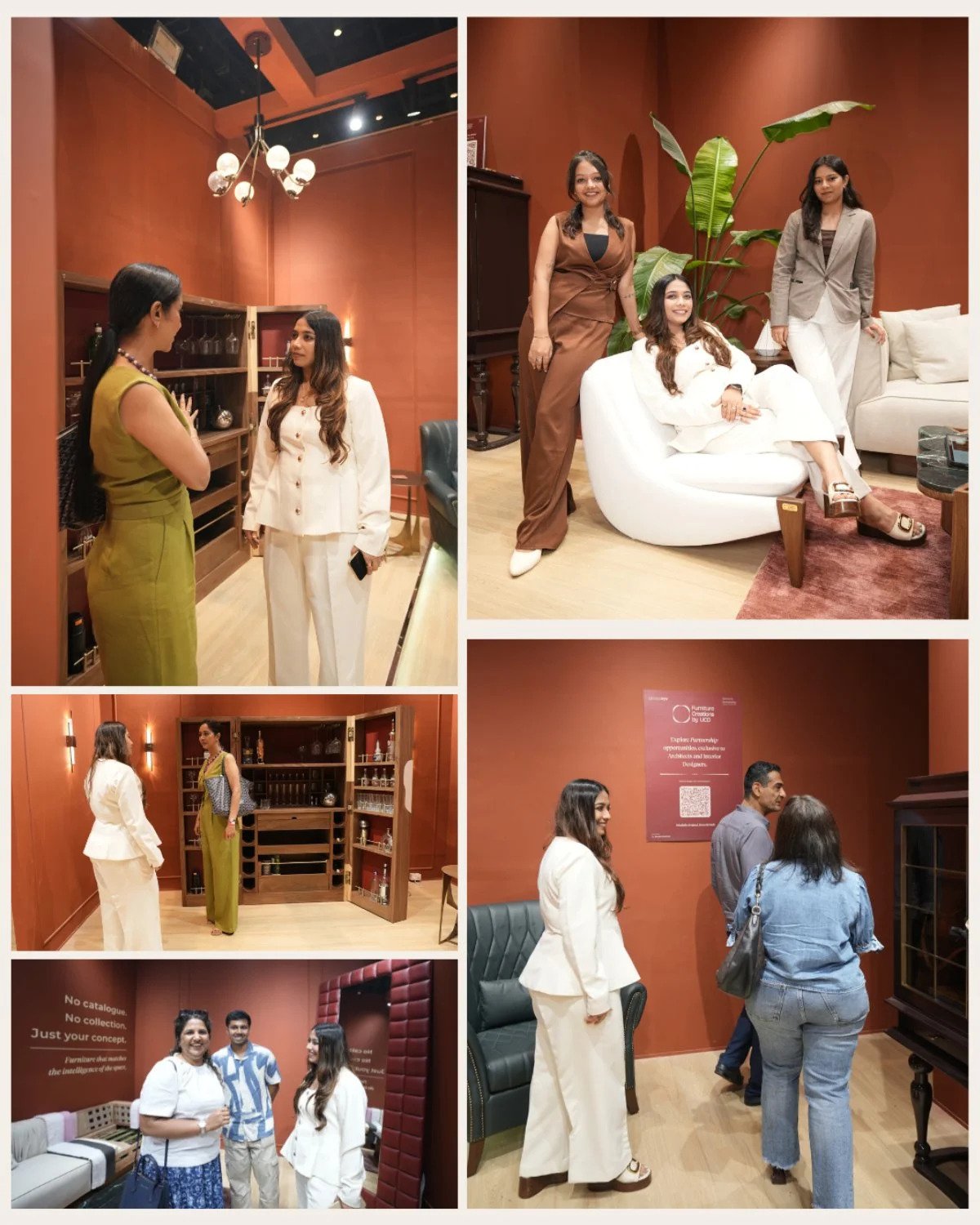
    Photographs from the Design POV stall with visitors
    Design POV, stall and visitors.
  10. Day 31 onwards

    Content shoot: reels, ad videos and product shoots

    Cut for social media and ads.

    Beyond the launch content, the brand needed reels that explain the product and reels that travel. Three formats from the content bank.

    0:00
    Sofa anatomy reel. How the piece is built.
    0:00
    Trending-format reel.
    0:00
    Theme-based AI reel.
  11. Day 1 onwards

    Social media

    Designed, scheduled and posted under the guidelines.

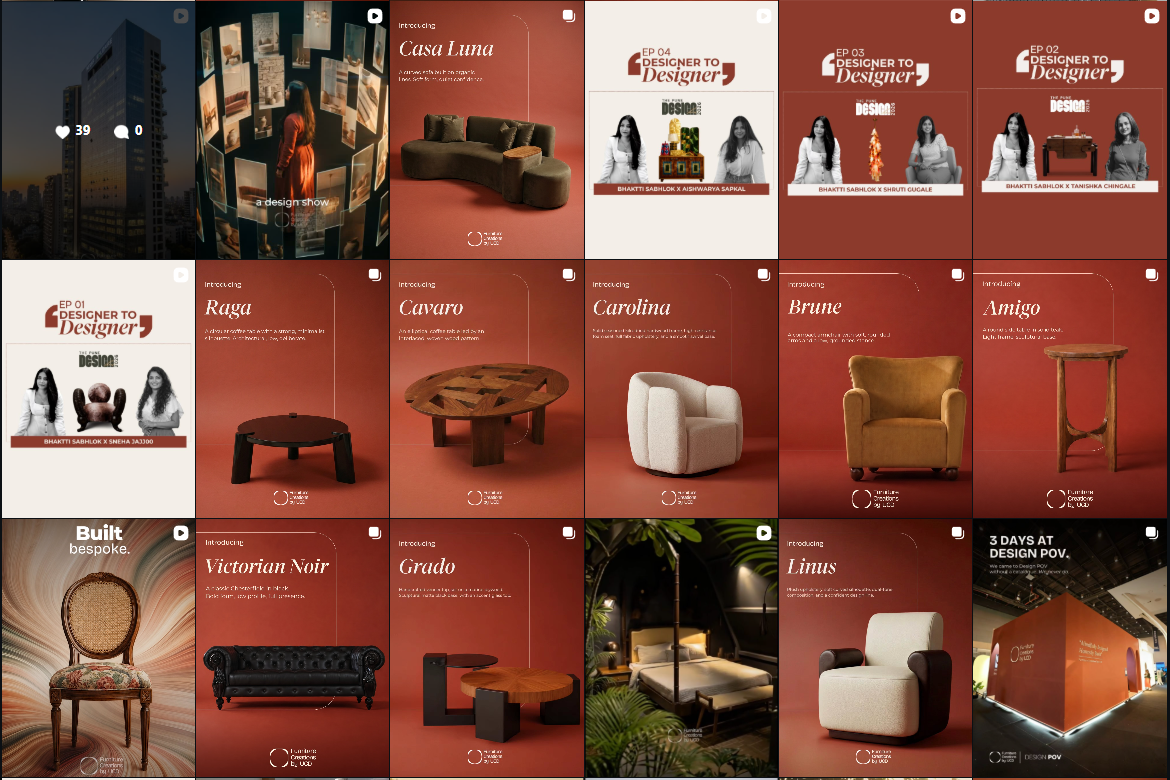
    Product, process, founder and collection posts in one visual system, live from the teaser phase so the profile was ready when the QR codes sent people to it.

    Furniture Creations by UCD Instagram grid
    Instagram grid.
  12. Day 31 to 60

    Website

    Live before Design POV, feeding the CRM.

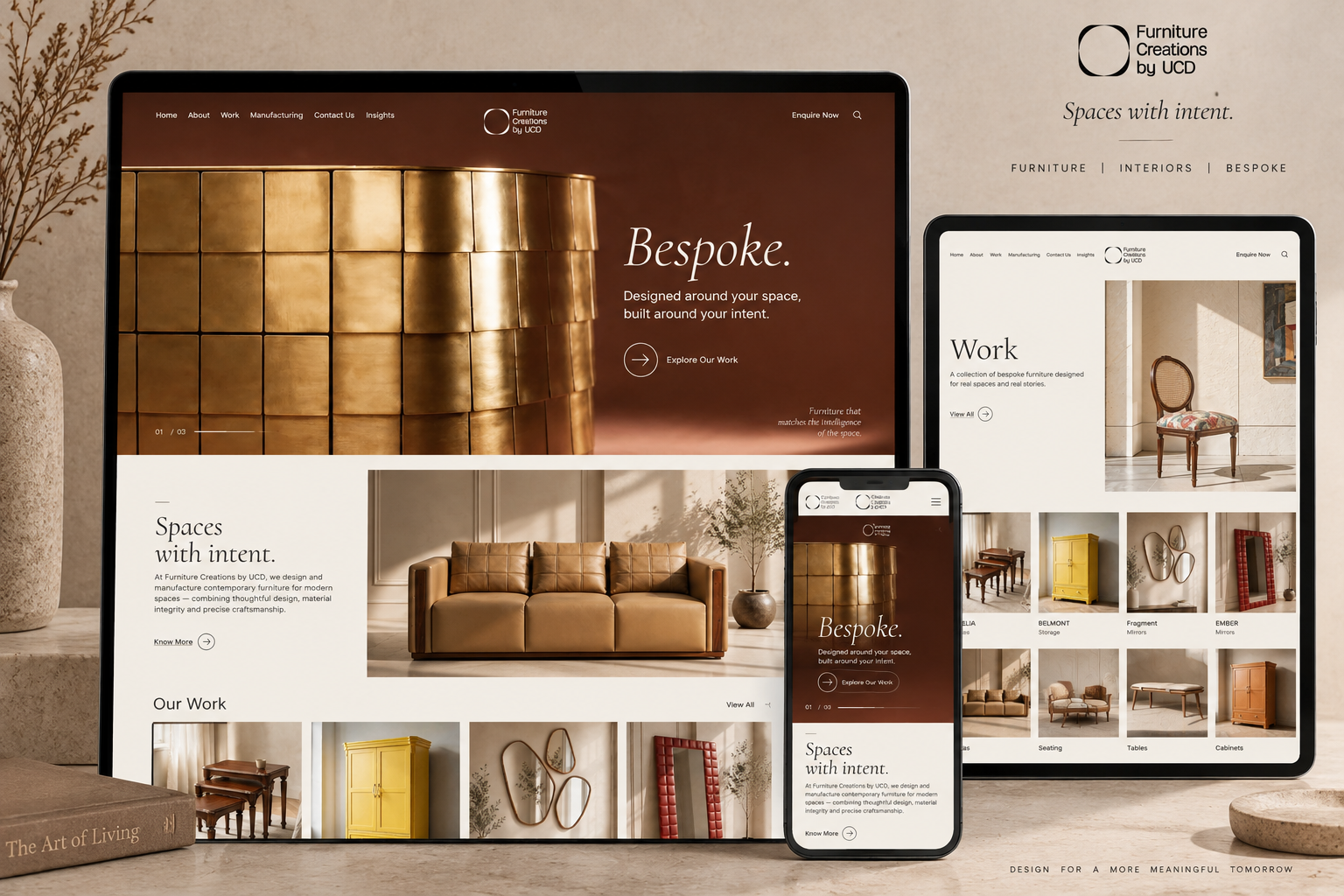
    Collections, the founder’s story, the practice link and enquiry forms. The stall QR codes landed here, so every visitor who scanned was captured and could be retargeted.

    Furniture Creations by UCD website screens
    Website screens.
  13. Day 45 onwards

    Digital marketing setup

    Google and Meta.

    Meta carried the teasers and the architect collaboration reels to architect and designer audiences in Mumbai, Navi Mumbai and Pune before and during the exhibition, then switched to retargeting the stall QR list. Google search covered brand and collection intent after launch.

    Google

    Search campaigns on brand and collection intent. Retargeting for site visitors.

    Meta

    Teasers and collaboration reels to architect and designer audiences. Retargeting on the Design POV list from day 91.

  14. Day 1

    Sales system setup

    Live before the exhibition, so no enquiry was lost.

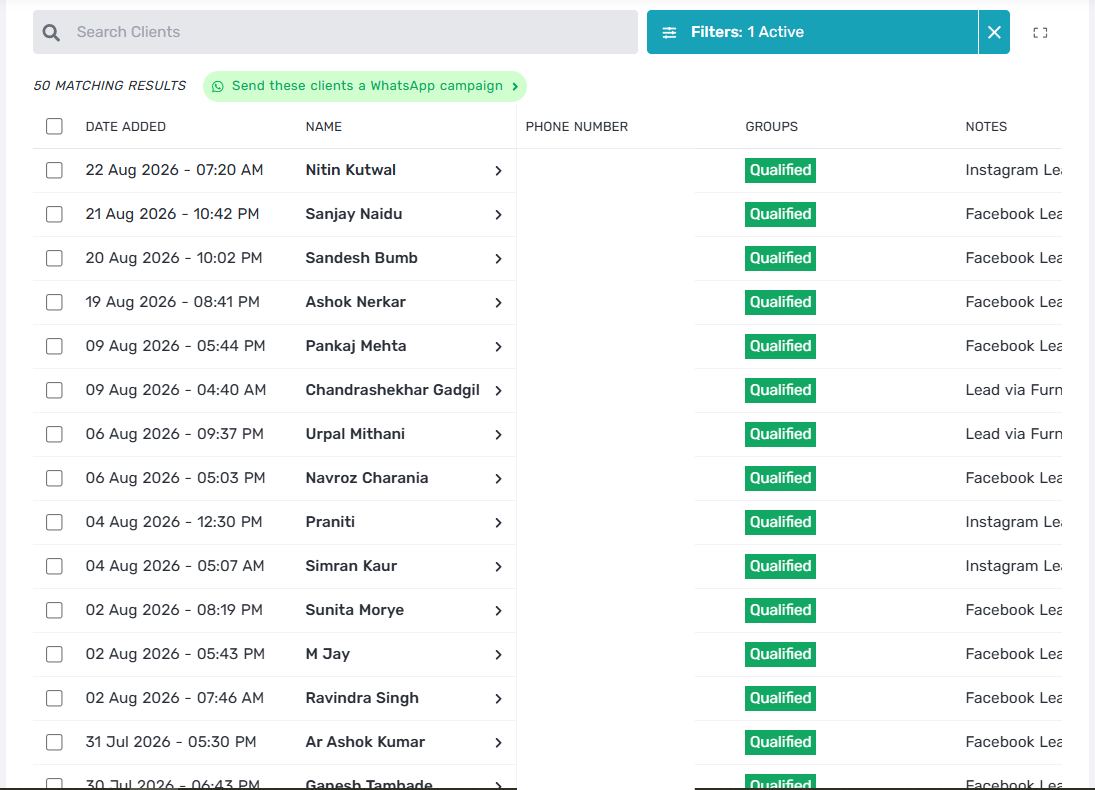
    The CRM was running before the stall opened. Every scan, form and DM landed in one pipeline tagged with its source, Instagram, Facebook or the stall QR, and was worked through a fixed sequence: acknowledged, called, qualified, meeting booked. The founder stopped doing pre-sales on day 1 of the sprint.

    CRM screenshot showing Furniture Creations by UCD leads tagged Qualified with Instagram and Facebook sources
    CRM view. Leads by source, tagged Qualified.

    Call pitch SOP

    A written script and qualification questions, so every first call sounds like the brand and captures the same data.

    Follow-up materials

    Company profile, mobile catalogue and collection material, ready to send from the CRM after the first call.

    Post-exhibition architect follow-up

    Every architect captured at Design POV entered a follow-up sequence: thank-you, catalogue, meeting request, retargeting. This was the KPI.

    Daily reporting

    A daily status of new leads, calls made, meetings booked and qualification outcomes, reviewed with the pre-sales team.

  15. Day 61 onwards

    WhatsApp marketing

    The part most brands skip.

    Every enquiry receives an acknowledgement on WhatsApp the moment it comes in, with the brand introduction and the mobile catalogue. The Design POV list received the same within hours of scanning, while the stall was still fresh.

    When a segment goes cold, one bulk WhatsApp campaign from the CRM revives it at once, without the pre-sales team calling each contact individually.

    Why WhatsApp works for this audience: architects and designers want to text. They do not want to take a call from an unknown number. Meeting them on WhatsApp first turns the later call into a warm one.
  16. Measured

    KPI and tangible output

    Launch the product with every collateral in place, and run the post-exhibition architect follow-up system.

    The KPI for this sprint was not a lead count. It was a successful product launch at Design POV with every collateral ready, and a follow-up system for the architects met there. Both were delivered. The launch also produced numbers before it happened: more than 40 qualified enquiries and the first three sales closed before the exhibition opened its doors, with five renowned Mumbai and Pune architects on record as collaborators.

What changed for Furniture Creations by UCD

The brand launched at Design POV as a finished brand: mark, guidelines, film, profile, catalogue, website, stall and a live sales system. The founder attended her own launch as the designer, not the salesperson. After the exhibition, the architects she met were already in a follow-up sequence she did not have to run.

  • Synopsis, logo and guidelines frozen; one design language on the exhibition floor
  • Photoshoots, brand film, profile and catalogue delivered before the launch
  • Stall and collaterals built for data capture; website and social live before the doors opened
  • Teasers, architect collab teasers and collaboration reels released in sequence
  • 40+ qualified enquiries and the first three sales before Design POV opened
  • Five renowned Mumbai and Pune architects on record as launch collaborators
  • CRM, call SOP, WhatsApp automation and the post-exhibition architect follow-up system running from day 1
  • Founder time returned to architecture, product innovation and quality

Seen enough? Pick a slot.

Thirty minutes on Google Meet is enough to answer your questions, walk through the numbers and set a start date.

Book a one-on-one GMeet with the person who'll handle your account Takes a minute. You get the Meet link instantly.